

Vitamin C is one of those skincare ingredients that can be a little tricky to keep around.
Depending on the formula and how you store it, your serum can start to degrade over time.
And because there isn’t one expiration timeline that applies to every vitamin C serum, knowing when yours is still good takes a little more than counting the months since you opened it.
In this guide, I’ll walk you through how long vitamin C serum typically lasts, what can make it go bad faster, the signs I’d look for before tossing a bottle, and how to store it properly.
What Is Vitamin C in Skincare?
Vitamin C is a popular skincare ingredient that you’ll usually find in serums and moisturizers.
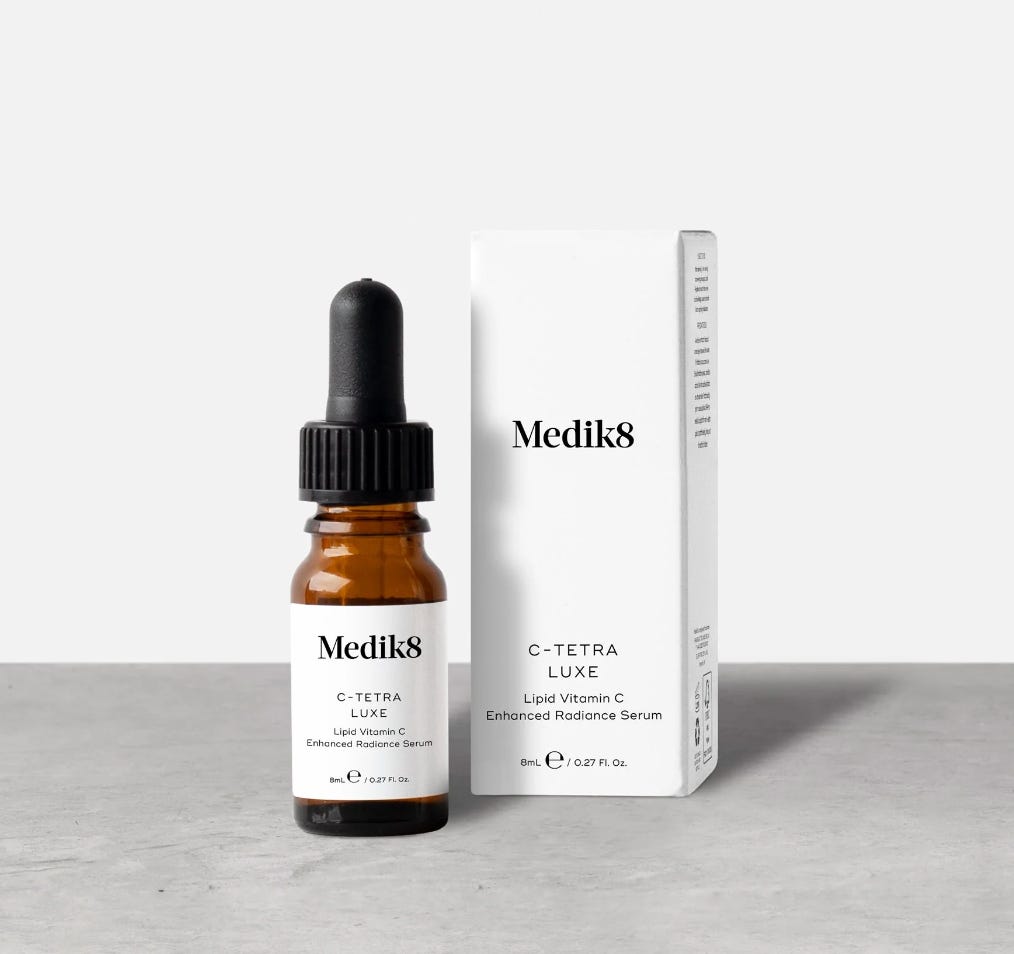
It’s a powerful antioxidant that helps protect your skin from free radical damage.
Research also shows that topical vitamin C can support collagen production and help with concerns like uneven skin tone and signs of sun damage.
I like using vitamin C in my morning routine, usually after cleansing and before moisturizer and sunscreen.

But when you’re trying to figure out how long your vitamin C serum will last, the form of vitamin C matters.
L-ascorbic acid is the pure form and one of the most well-studied forms used in skincare, but you’ll also see derivatives such as:
Magnesium ascorbyl phosphate: A water-soluble vitamin C derivative commonly used in brightening formulas.
Tetrahexyldecyl ascorbate (THD): An oil-soluble vitamin C derivative that tends to be more stable than L-ascorbic acid.
3-O-ethyl ascorbic acid: A vitamin C derivative that has been studied for its stability and skin-brightening properties.
These differences matter because not every form of vitamin C has the same stability.
I’ve talked more about the different forms of vitamin C in a previous article, but for this guide, the important thing to know is that you can’t give every vitamin C serum the exact same shelf life.
The formula itself, along with its packaging and how you store it, can all affect how quickly your serum starts to degrade.
How Long Does Vitamin C Serum Last?
As a general guideline, I’d aim to use an opened vitamin C serum within about three to six months.
That’s an estimate, though, not a universal expiration date.
How long your serum stays in good condition depends on the form of vitamin C, the overall formula, the packaging, and how you store it.
Before relying on that three-to-six-month range, check the bottle or box for the manufacturer’s instructions.
You may see an expiration date or a period-after-opening (PAO) symbol, which looks like a small open jar with a number inside it.
For example, the 3M symbol on the bottle below means the manufacturer recommends using the product within three months after opening.
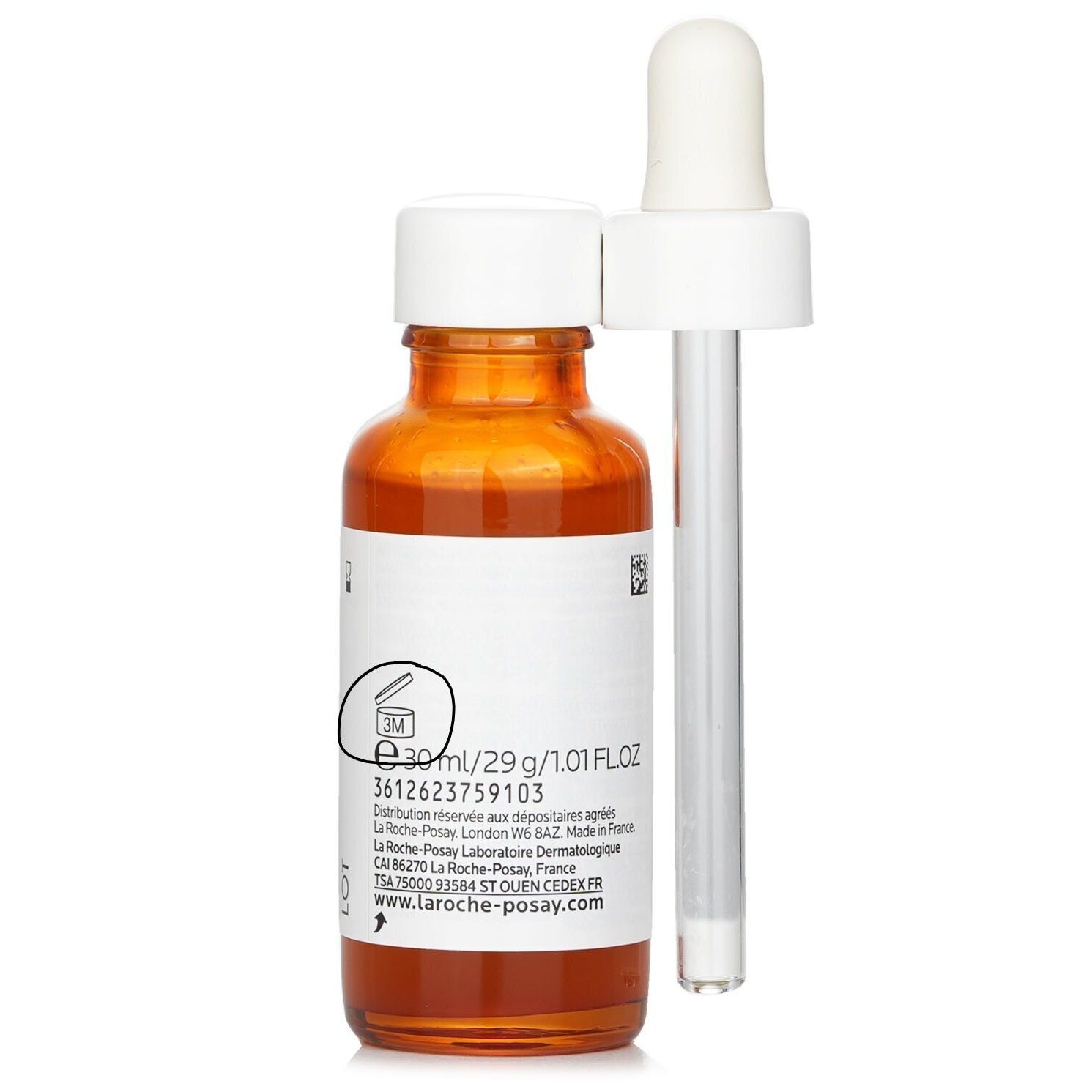
You might also see 6M or 12M on other skincare products.
If your vitamin C serum gives you one of these timelines, I’d follow that product-specific guidance first.
This is especially important because vitamin C formulas don’t all age at the same rate.
L-ascorbic acid is particularly difficult to keep stable, while some vitamin C derivatives are more stable.
So I wouldn’t automatically throw out every serum once it reaches three months, but I also wouldn’t assume an opened bottle is fine indefinitely.
How the serum looks, smells, and feels can give you more clues about whether it has started to degrade.
Why Does Vitamin C Serum Go Bad?
Vitamin C can be a frustrating ingredient because some forms are harder to keep stable than others.
L-ascorbic acid is especially prone to oxidation.
When it reacts with oxygen, it gradually breaks down, and certain conditions can speed up that process:
Air: Opening the bottle exposes the formula to oxygen, which can contribute to oxidation over time.
Light: Repeated light exposure can speed up the degradation of L-ascorbic acid.
Heat: Storing your serum somewhere that gets consistently hot can make an already unstable formula degrade faster.
The formula itself: Concentration, pH, and the other ingredients used in the formula can influence its stability.
This is why two vitamin C serums can age differently even if you opened them on the same day.
Some formulas are simply better protected against degradation than others.
How to Tell If Your Vitamin C Serum Has Gone Bad
The easiest way to tell if your vitamin C serum is going bad is to compare it with how the product looked, smelled, and felt when you first opened it.
Here are a few changes I’d watch for:
Color: If a serum that started clear or very pale begins turning noticeably darker, especially orange or brown, that can be a sign of oxidation.
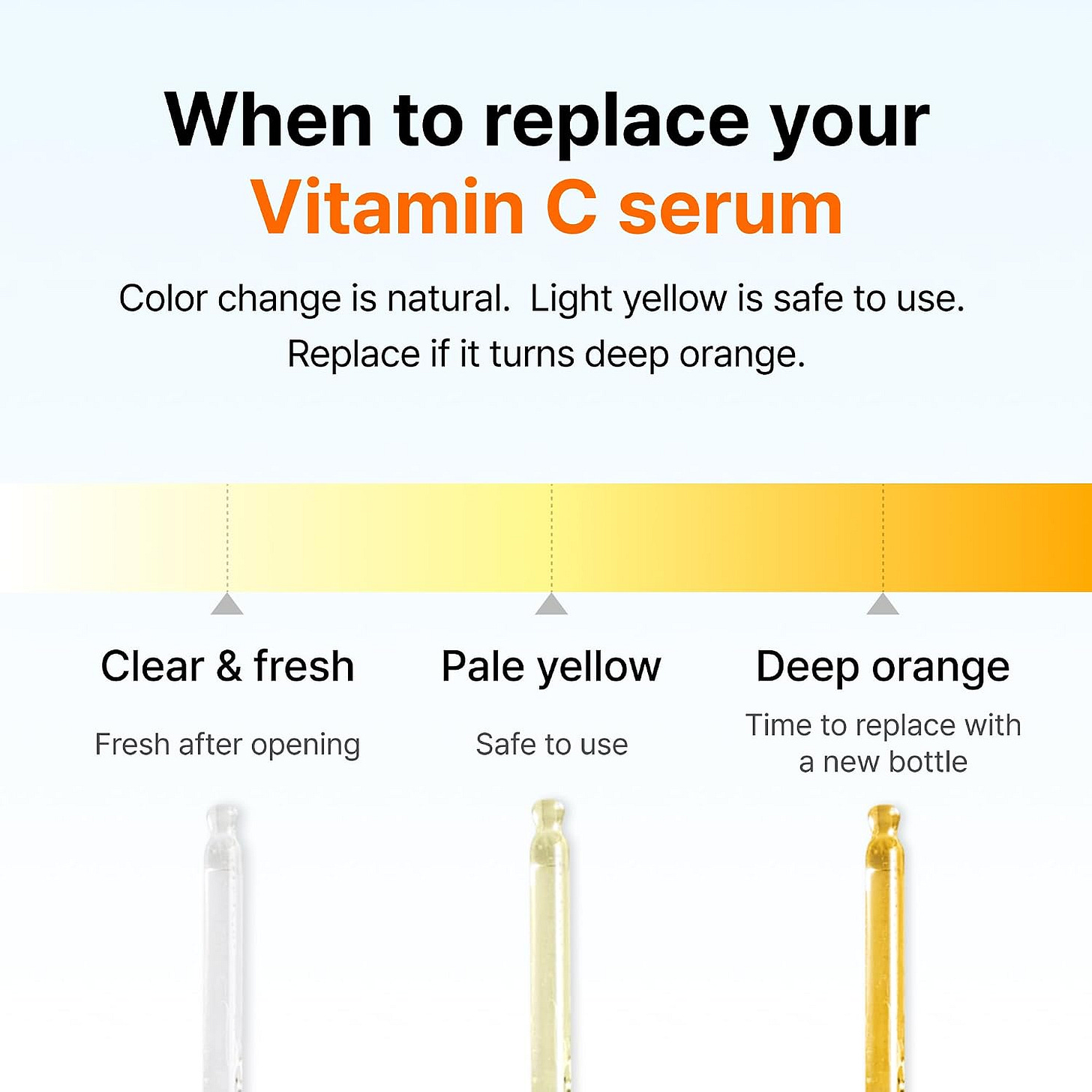
Image from amazon.com Smell: A new or noticeably different odor can be a sign that the formula has changed.
Texture: If the serum becomes unusually thick, separates, or develops a texture it didn’t originally have, I’d be cautious about continuing to use it.
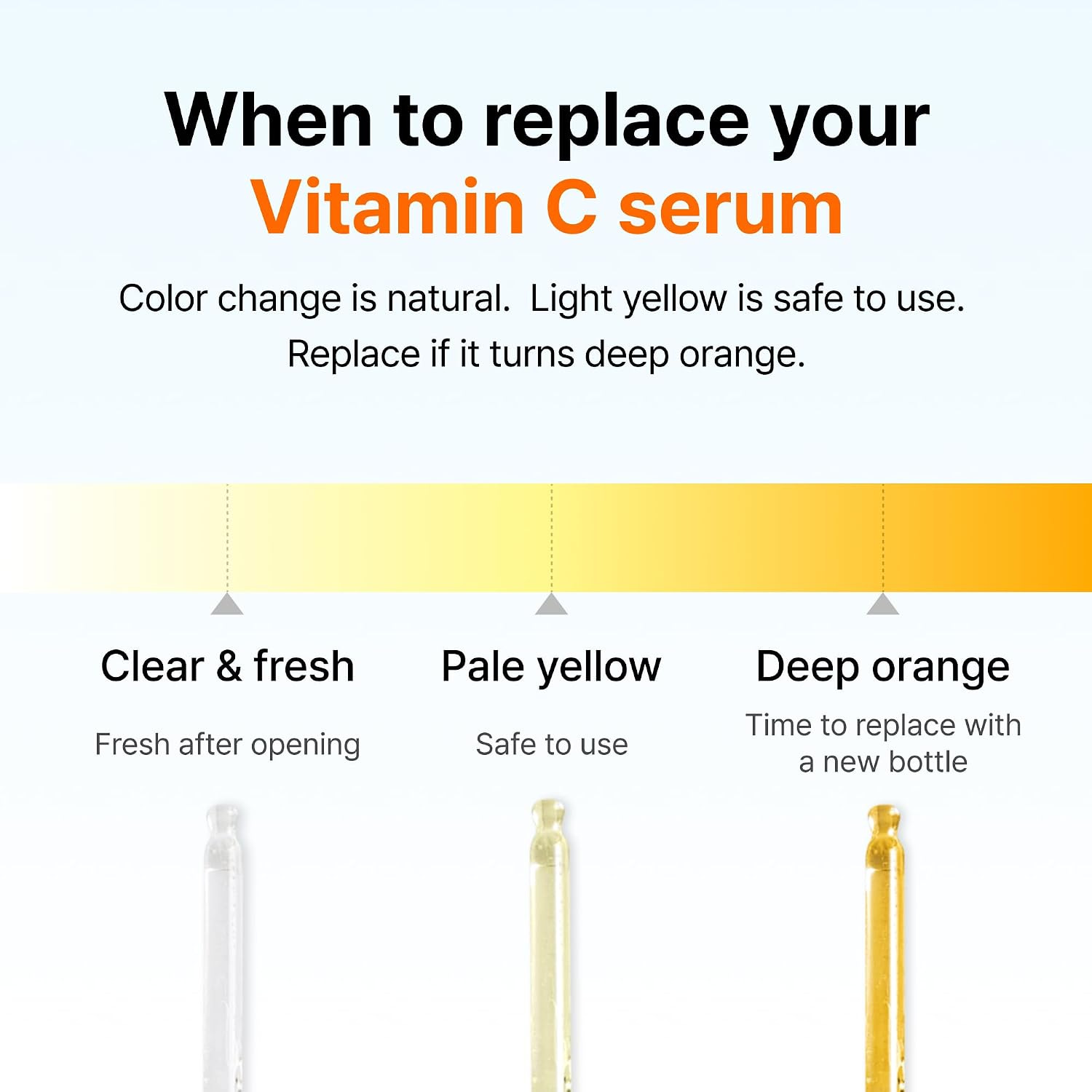
Color can be a little tricky because some vitamin C serums are already yellow when they’re new.
I wouldn’t judge a bottle based on color alone.
What matters more is whether you’ve noticed a significant change from the serum’s original appearance.
If your serum has changed substantially in color, smell, or texture, I’d replace it rather than keep trying to finish the bottle.
How to Store Vitamin C Serum
How you store your vitamin C serum can make a difference in how well the formula holds up over time.
I’d keep it somewhere cool, dark, and away from direct sunlight or heat.
A cabinet or drawer is usually a better spot than leaving it on a sunny bathroom counter.
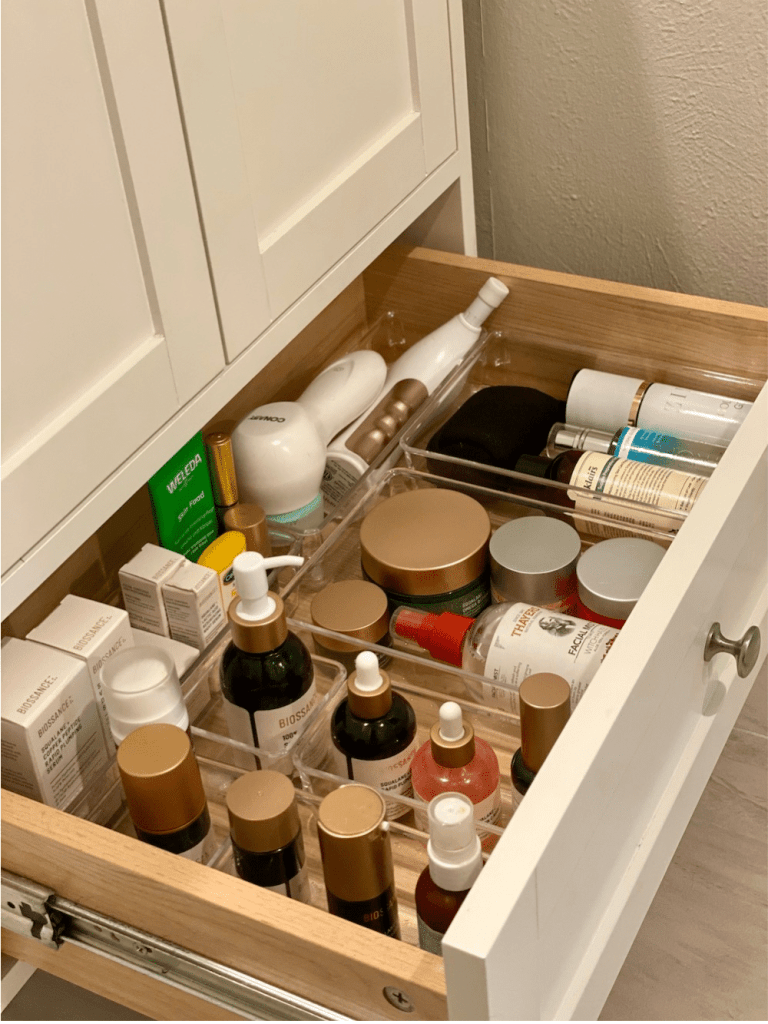
I’d also make sure the bottle is closed properly after every use.
If your serum comes in a dropper bottle, try not to leave it sitting open while you finish the rest of your routine.
You don’t necessarily need to keep vitamin C serum in the refrigerator, either.
Unless the brand specifically recommends refrigeration, following the storage instructions on the packaging is your best bet.
And if the bottle comes in dark or opaque packaging, there’s a reason for it.
That packaging helps limit light exposure, so I wouldn’t transfer the serum into a different container just because another bottle looks nicer.
If you’re looking for a new vitamin C serum, I put together 10 Vitamin C Serums You Should Know About with some options worth checking out. And if you want to learn more about choosing and using vitamin C in your routine, you can also read The Real Reason Your Vitamin C Serum Isn’t Doing Anything.
Final Thoughts
Vitamin C serum doesn’t come with one shelf life that works for every formula, so I wouldn’t rely on the three-to-six-month estimate alone.
Check the expiration date or PAO symbol first, store your serum properly, and pay attention to any noticeable changes in color, smell, or texture.
If something seems significantly different from when you first opened the bottle, I’d replace it.
Vitamin C can be a finicky ingredient, but a little attention to how you store and use it can help you get the most out of each bottle.
Cheers,