

My face has been changing, and I don’t think I fully clocked it at first.
It just kind of crept up on me.
I’ve definitely started developing nasolabial folds as I’ve been aging through my twenties, and they kind of bother me.
It’s annoying because I used to only notice them when the lighting was bad, like when you catch yourself at a weird angle and just move on.
But now I can see them when I wake up in the morning, in completely normal lighting, just there.
It’s subtle, but once you notice it you really can’t stop.
I’m also dealing with enlarged pores, and part of that is on me.
I’ve been wearing a lot more makeup lately, which I actually love.
I’ve been learning how to do it properly, and it’s become this enjoyable process for me.
I like showing up beautifully for the world, I started this newsletter to write about skincare but makeup kind of took over and I don’t regret it.
The problem is that wearing it more often means I sometimes get clogged pores, which is annoying, and clogged pores can make them look even bigger and more noticeable.
Then there's my jawline.
I don't have a double chin, but sometimes I look in the mirror and I'm just like, I wish there was a little bit less there, you know?
I've thought about something like Kybella, which is a treatment that breaks down the fat under your chin, but why do an injectable if I could just try something less invasive at home first.
My eyes are a separate thing entirely.
I’m starting to get crow’s feet, and I don’t mind them that much when I’m smiling because it looks like I’ve lived, signs of life and all that.
What I do mind is that I definitely made it worse myself.
I have this really bad habit of rubbing my eyes hard when I’m tired, and I mean really hard.
When I used to live with my best friend she could literally hear me doing it from another room, and she said it gave her the ick, which, fair enough, lol.
All that tugging on such thin skin over time adds up, and now when I wear makeup I can actually see it.
The crow’s feet make everything get all crinkly in there, the texture shows more, and it’s just one of those things where my own habits made the problem worse.
So that's kind of where I was when ViForme reached out, and in this piece I'm going to walk through what I actually tried, what changed, and whether it made any real difference around my neck and eye area.
What Is ViForme?
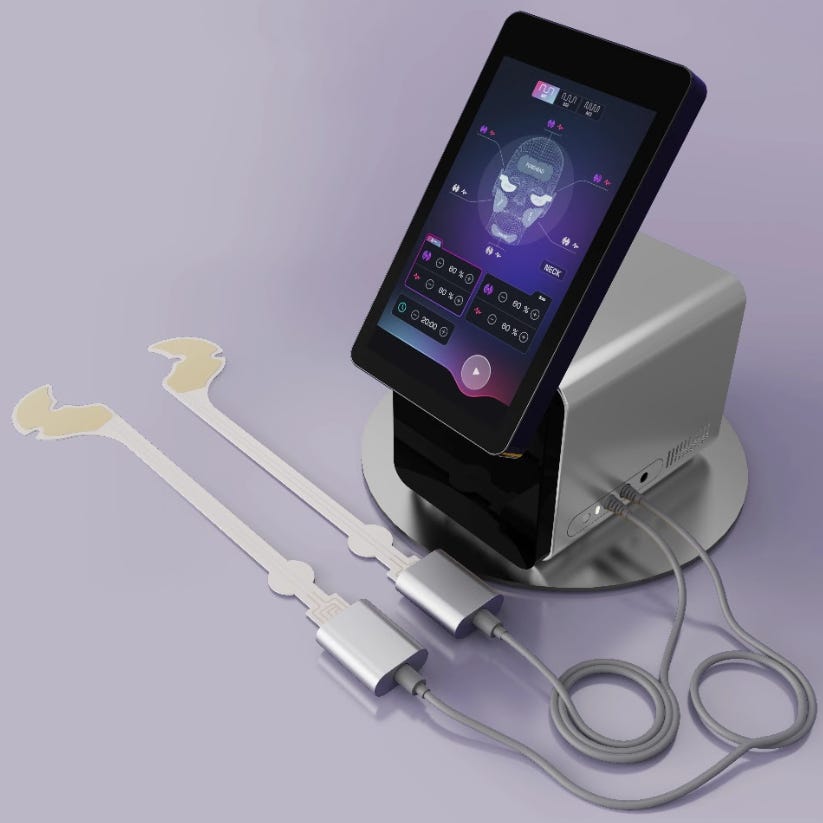
ViForme is an at-home device that uses radio frequency and microcurrent, and it felt like something worth trying before going down the injectable route.
The appeal was pretty straightforward for me.
I could use it at home, on my own time, without booking anything or planning around a clinic schedule.
Most treatments like this you’re paying per session and committing to a whole program upfront, which is fine, but it does feel like a lot before you even know if it’s going to work for you.
This felt easier to just start.
You buy it once, you have it, you use it when you want and focus on whatever areas you’re actually concerned about.
What I also liked is that it’s doing two things at once:
Radio frequency stimulates collagen production in the deeper layers of your skin, which is what improves skin fullness and elasticity over time.
Microcurrent works more on the muscle side, sending small electrical currents that help with that lifted, more sculpted look.
So you're not just treating the surface, you're working a little deeper on both the skin and the structure underneath, which for my neck and eye area specifically felt like exactly what I needed to try.
Overview of the ViForme Device
When I opened the box, the first thing I noticed was the weight.
It’s heavy, which was not what I was expecting at all.
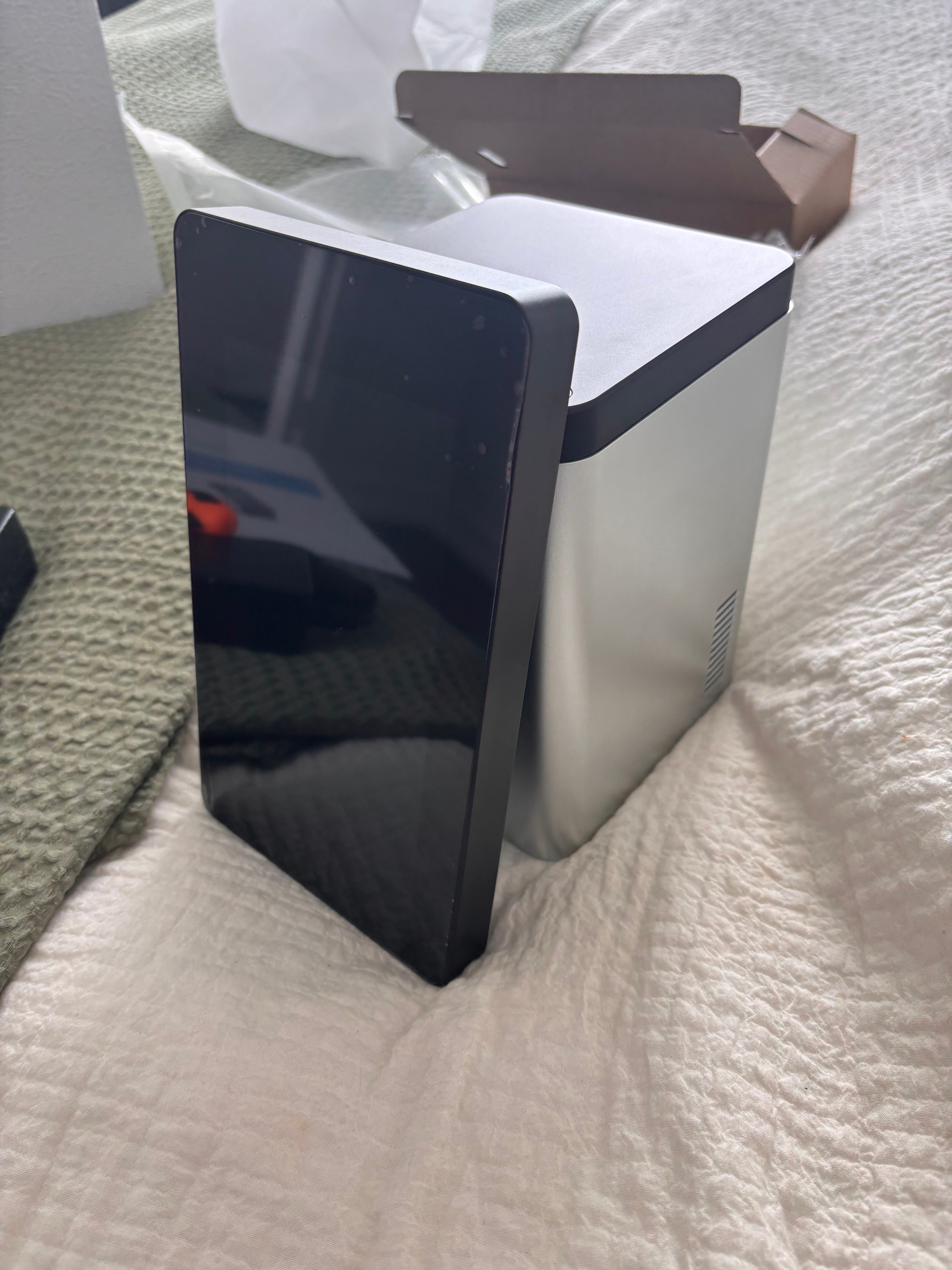
It felt solid, almost like something you’d see sitting in a treatment room at a med spa, that same kind of presence, built to do something.
Not really what I anticipated from something meant for home use.
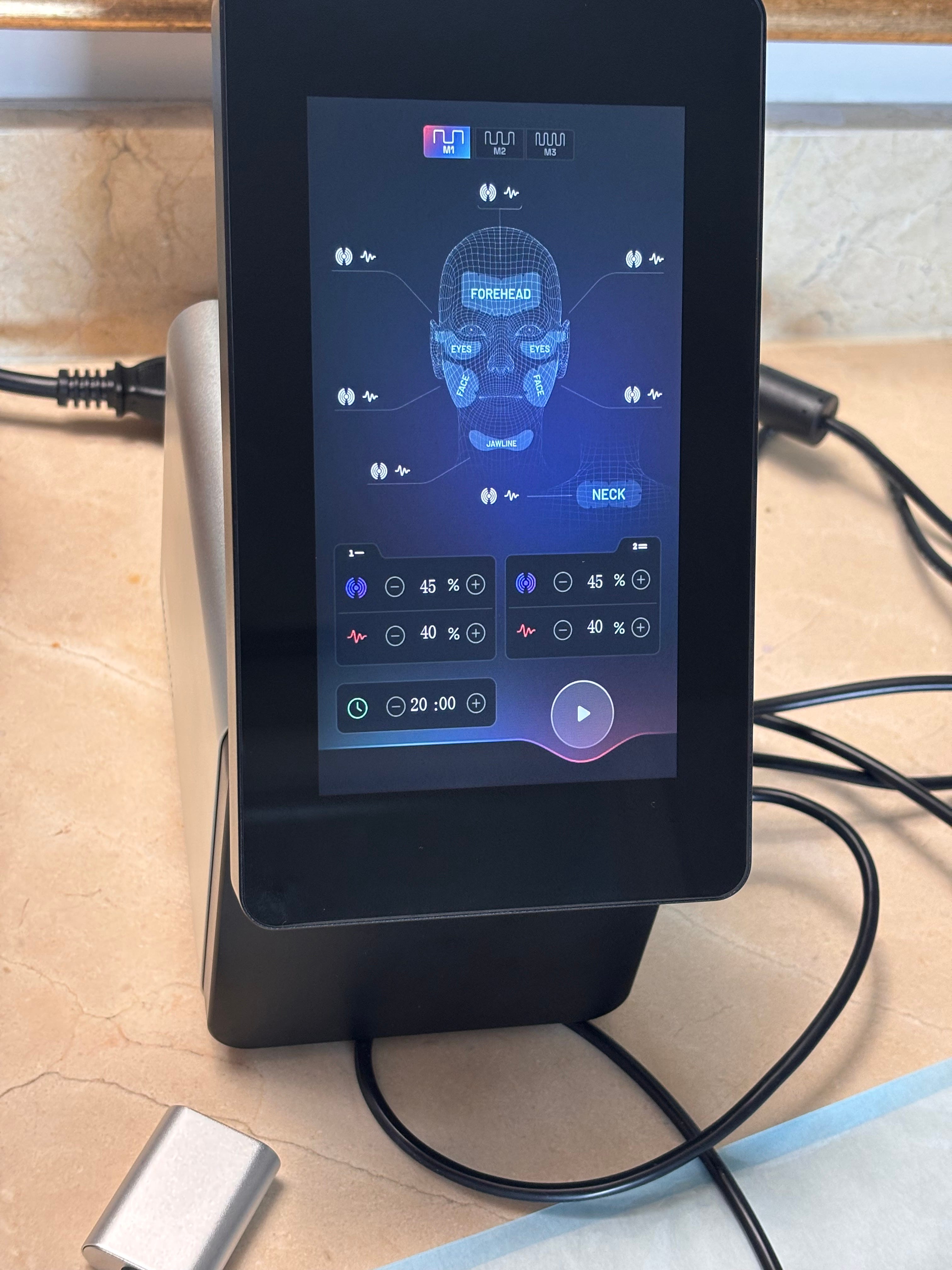
The device itself is a compact base with a built-in screen, and everything runs through that.
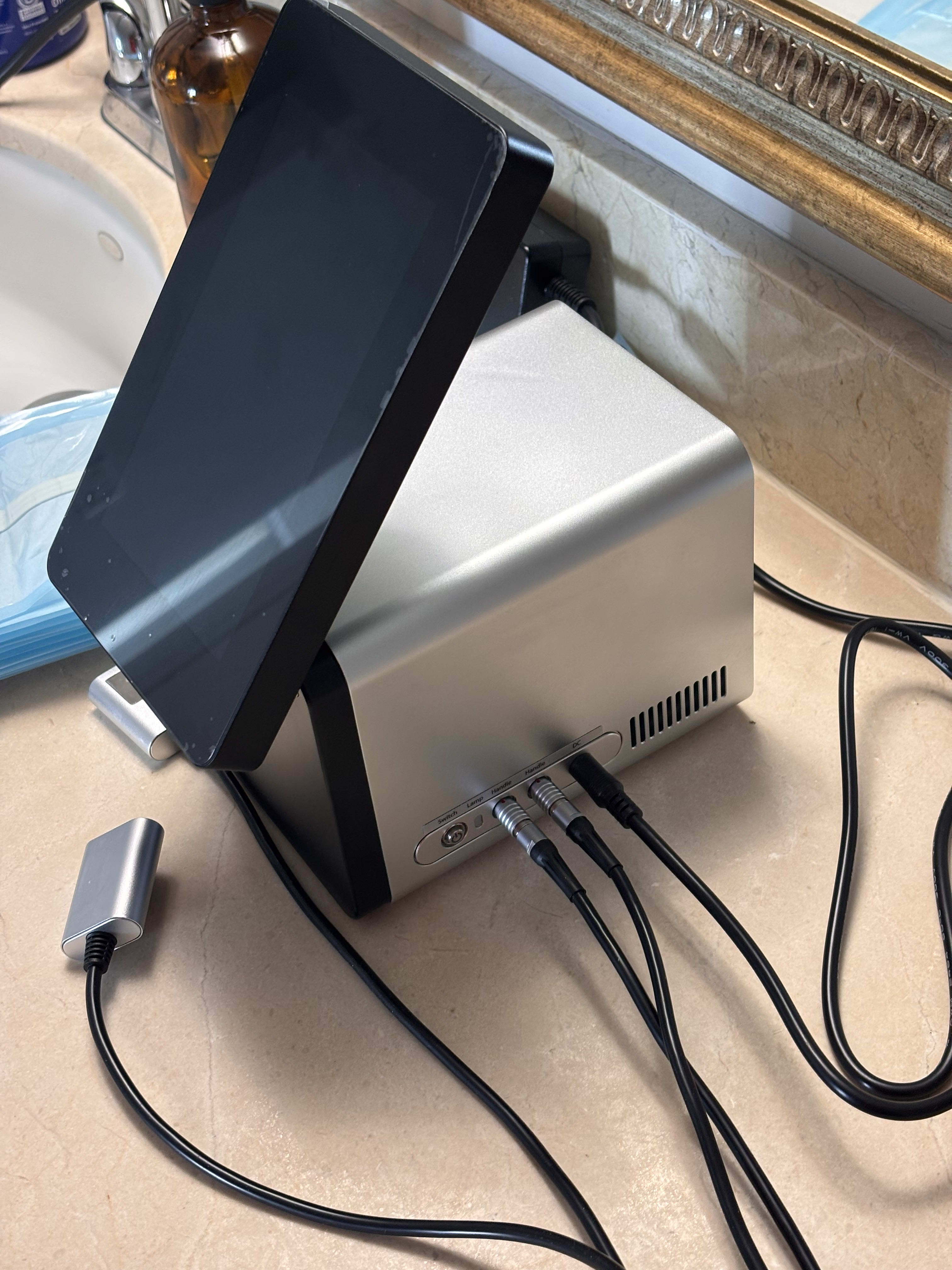
You plug it in and it becomes your control center for the session, and it doesn’t feel like a gadget so much as actual equipment.
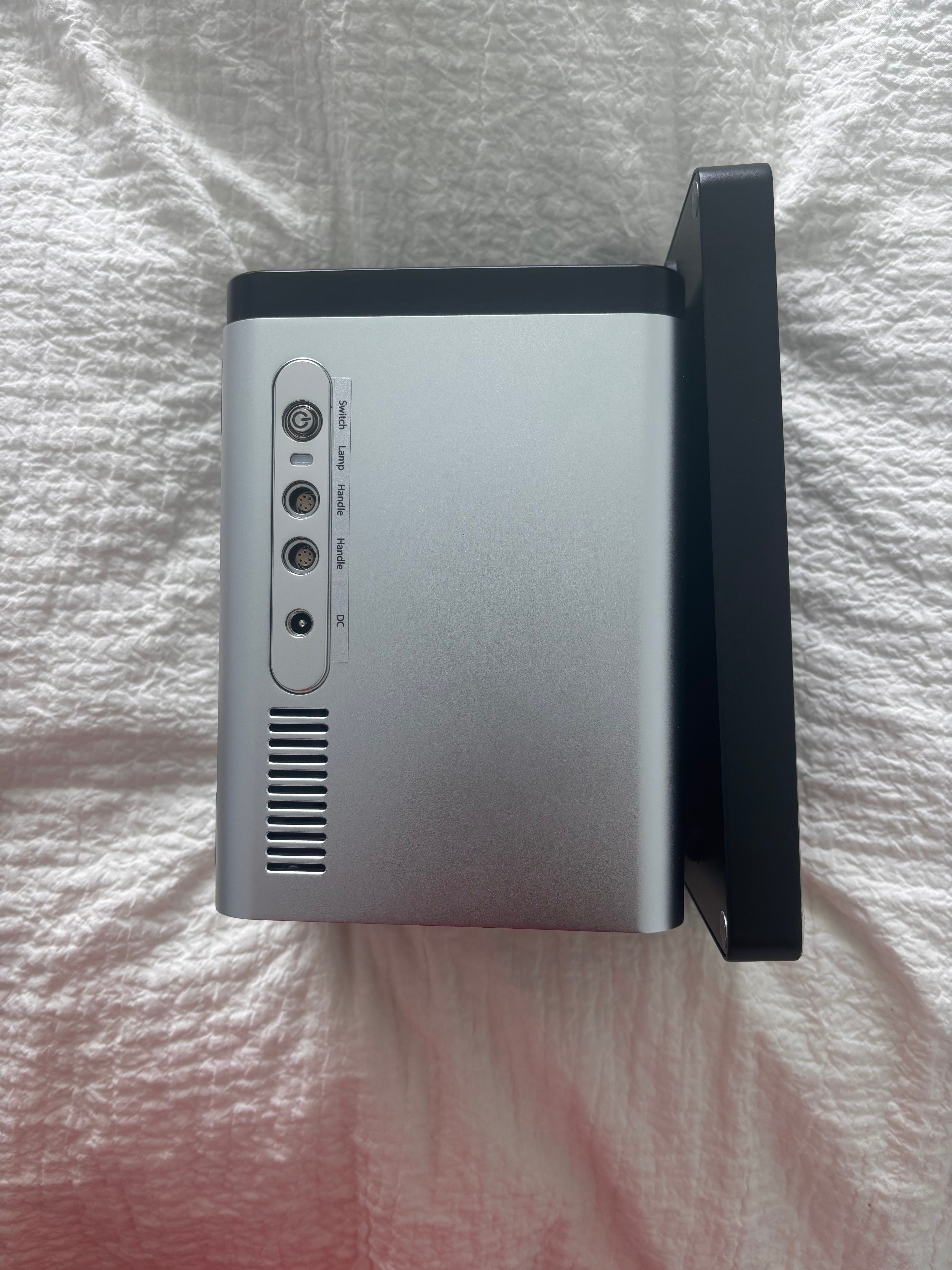
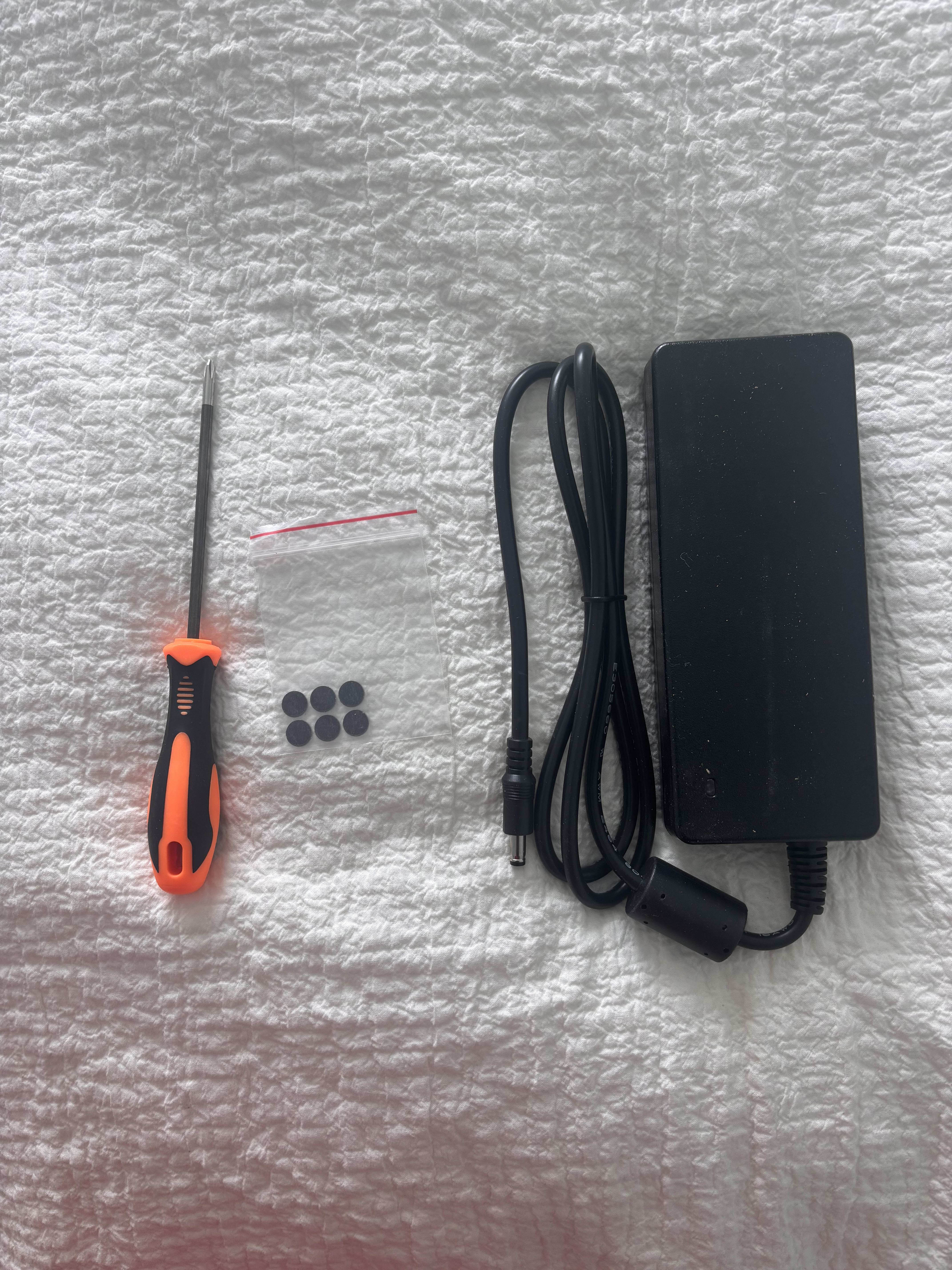
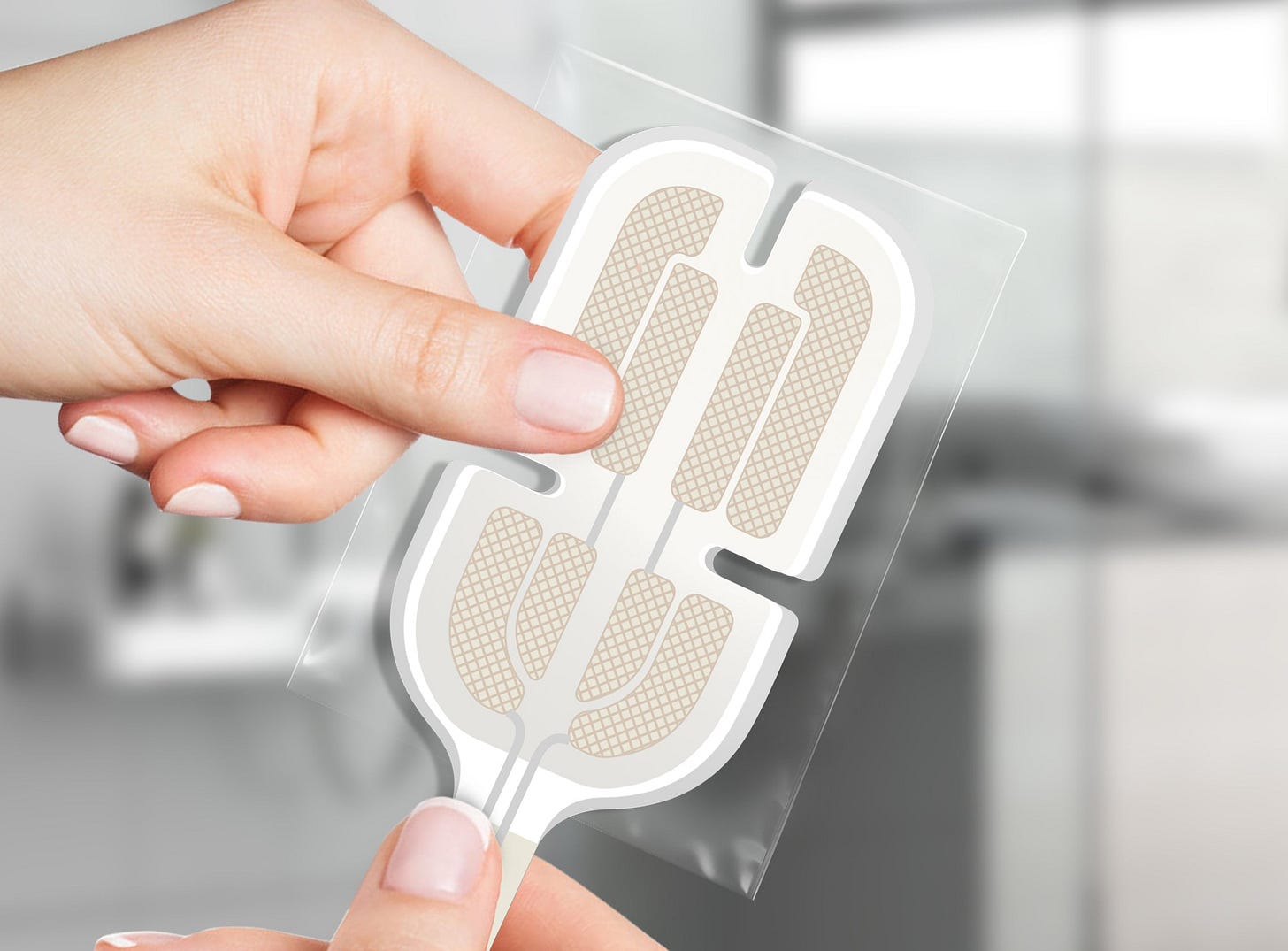
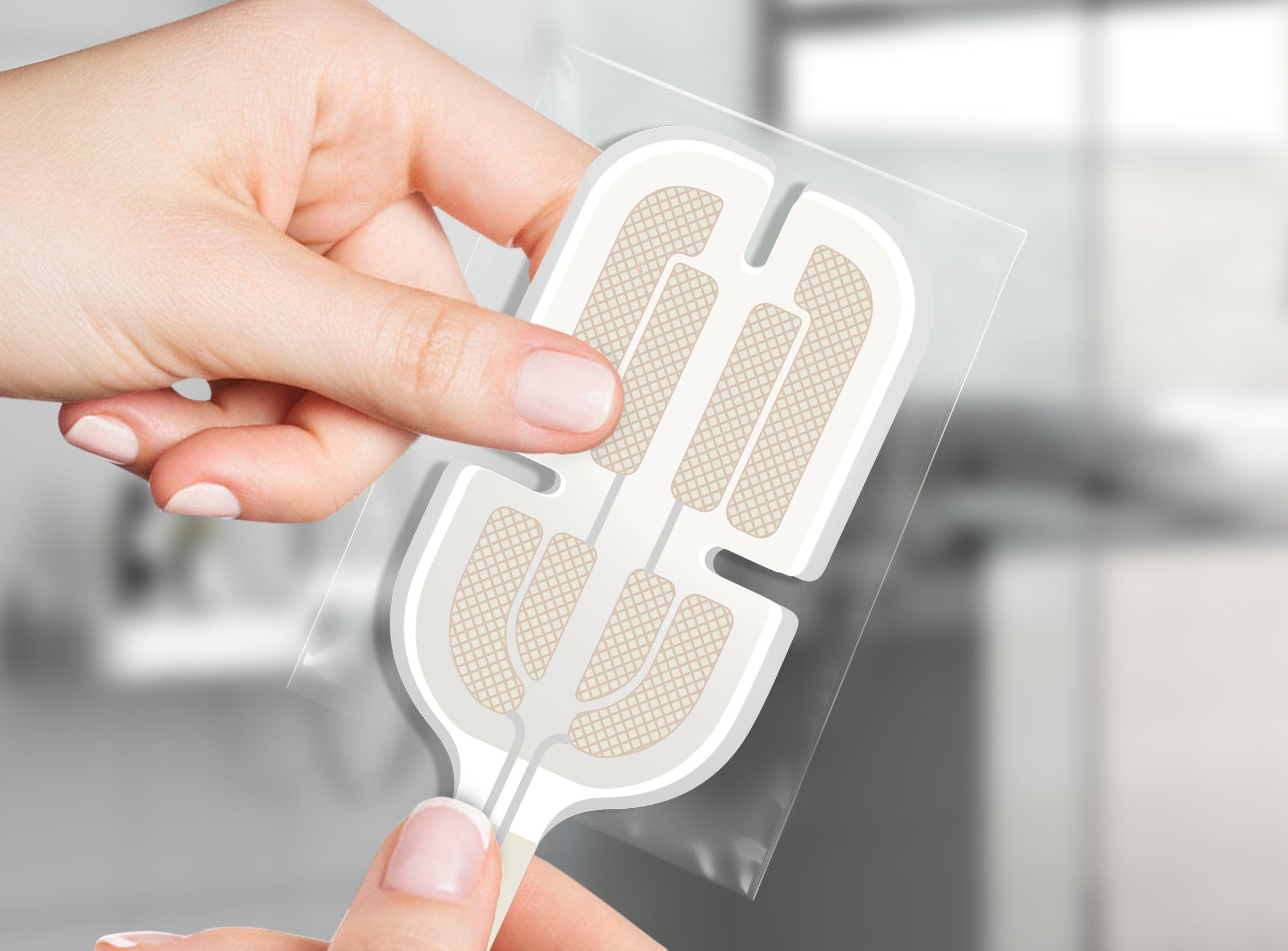
Inside the box you get the main device, the power adapter, connectors, and a stack of hydrogel electrode patches, plus a manual and some small tools and extra pieces, which made it feel more like a full setup than just a single product.
The patches are a big part of how this works.
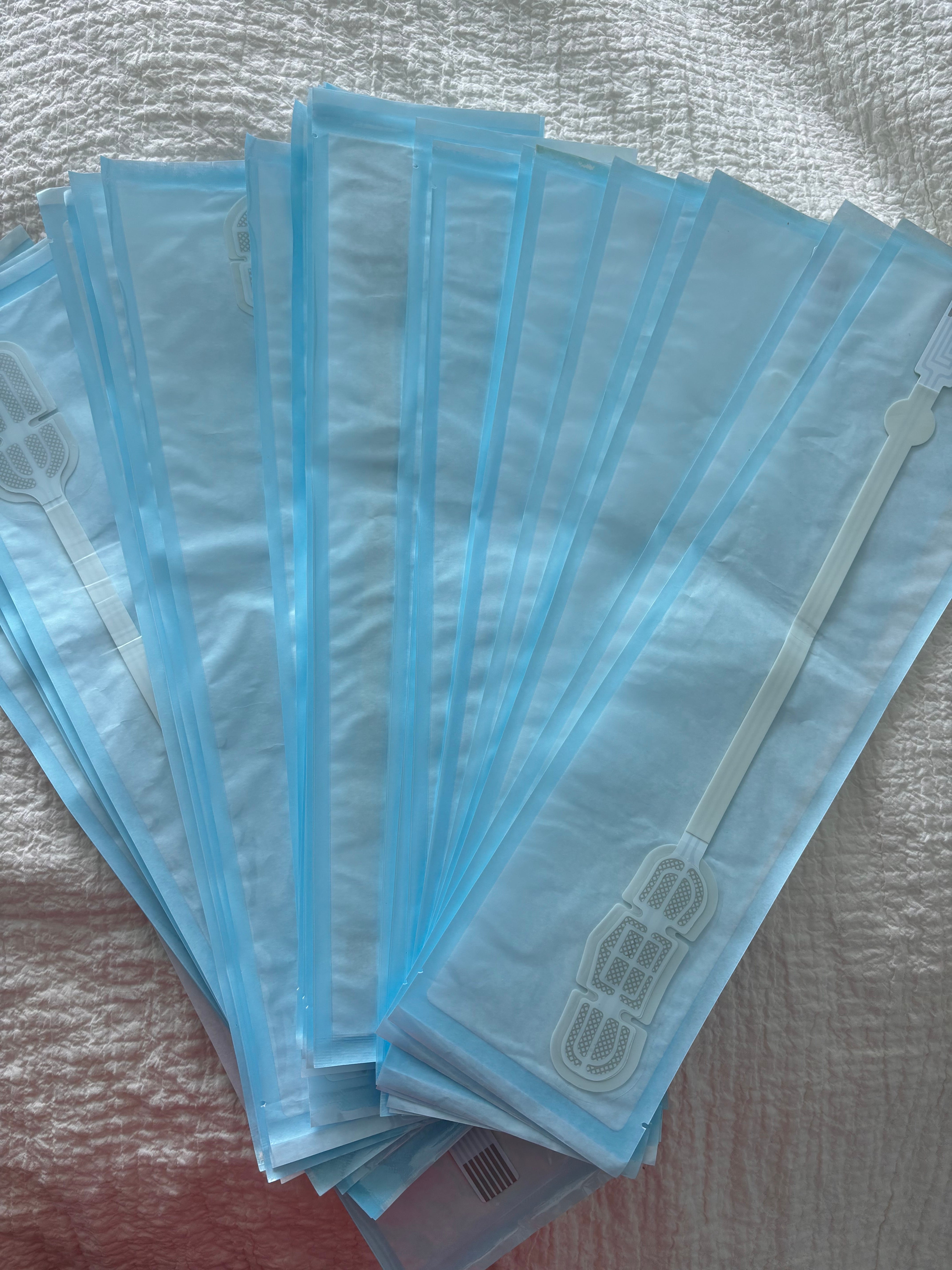
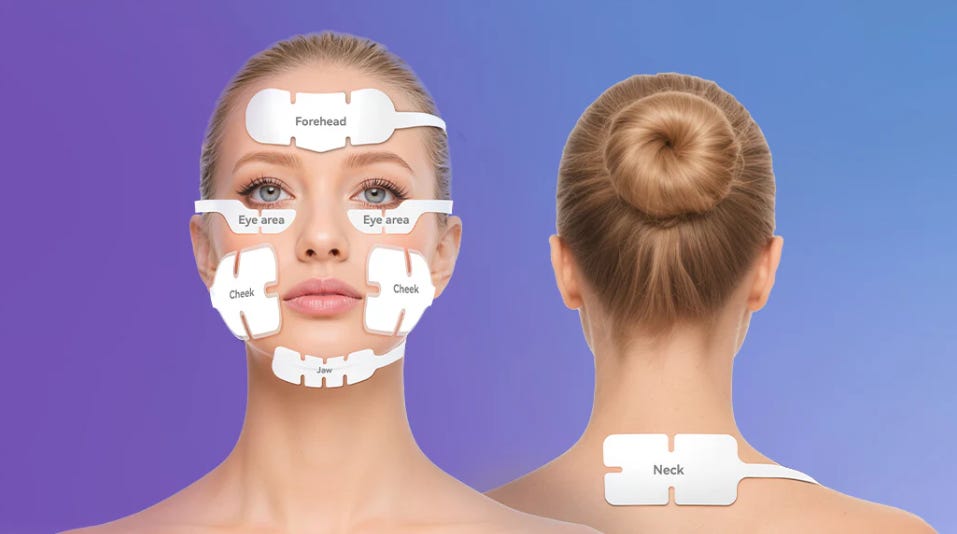
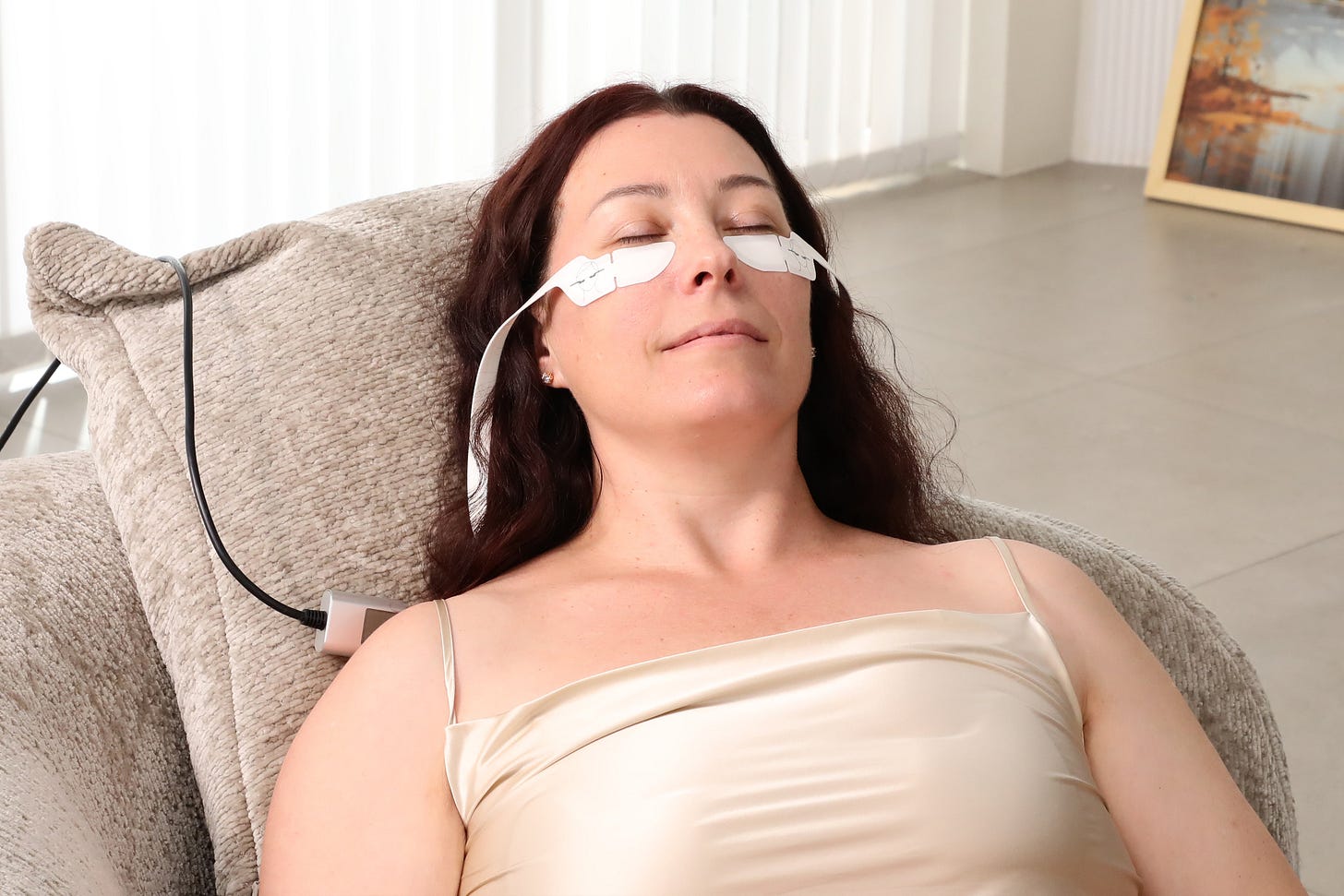
Instead of holding something to your face the entire time, you place them on specific areas like your forehead, under your eyes, cheeks, jawline and neck, and once they’re on the device runs the session for you.
It’s hands-free, which is different from anything I’ve used before.
Most at-home devices I’ve tried, like red light or microneedling, require you to stay engaged the whole time.
This one you set up, press start, and let it run.
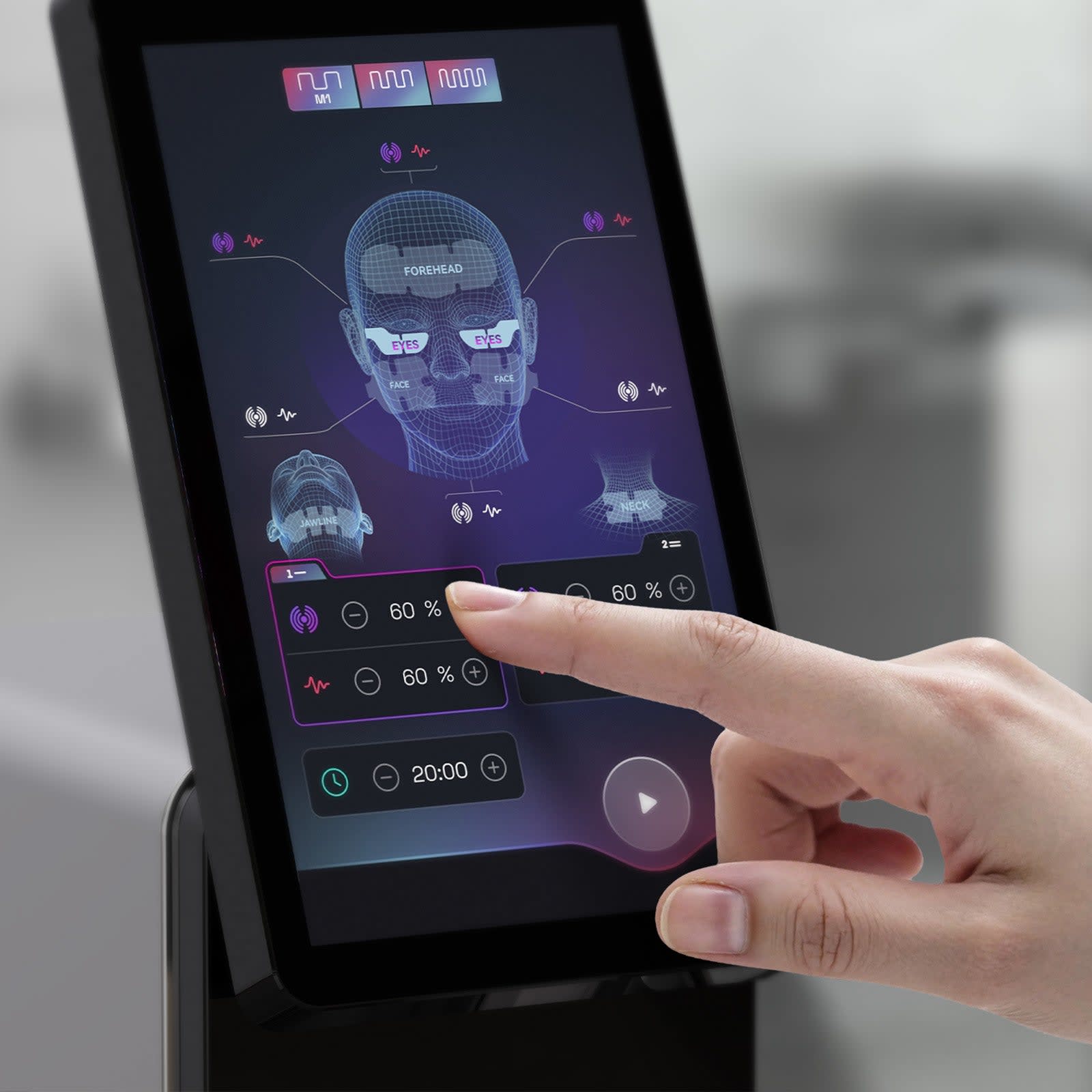
The screen shows a full face map and you can adjust the intensity by area, so it feels more advanced than the usual at-home tools without being complicated to figure out.
It’s also the first device I’ve used that combines radio frequency and microcurrent together like this, since most of what I’ve tried before falls into one category or the other.
It feels closer to something you’d get done at a professional level, just adapted for home use, and that’s kind of the whole shift.
At a med spa you’re paying per session and it adds up fast, whereas with this you pay once and then you have it whenever you want.
ViForme Benefits: Performance & Efficacy
Before getting into results, it’s worth talking about the alternative, because the first instinct for a lot of people is to just book something at a clinic.
Fillers and Botox work, and this isn’t about saying otherwise.
But they come with risks people don’t always talk about openly.
Lip flips, for example, can mess with your ability to make certain sounds properly for weeks, and drinking from a straw becomes a whole situation because you can’t form a seal.
Filler migration is a real concern too.
And if you’re thinking about something more serious like a facelift or a deep chemical peel, you’re looking at weeks of downtime and the risk of burns or complications.
These things are not without consequences.
What the device does depends on where you’re using it.
Around the eyes, the radio frequency stimulates collagen production in that thin under-eye skin to improve fullness and elasticity over time, while the microcurrent targets puffiness and circulation more immediately.
For the neck, the radio frequency goes deeper to work on chronic tension and stiffness over time, while the microcurrent helps ease soreness faster.
That combination of something working right away and something working over time is what makes it feel different from single-technology devices.
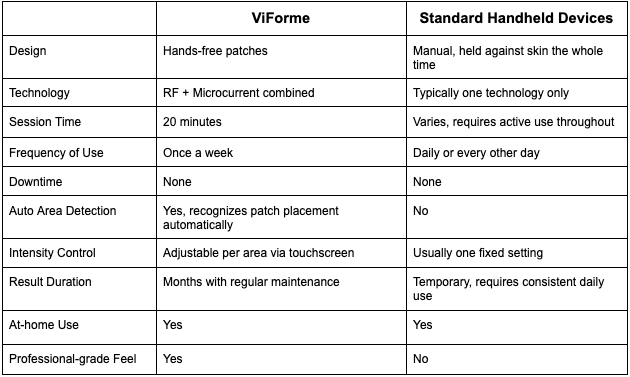
To put it in perspective, here's how it compares to the standard handheld devices most people are used to:
How to Use ViForme
Before you start, make sure your skin is clean and dry. I know that sounds obvious, but it matters here because the patches need to stick to your skin properly. Also, if you've had Botox or filler, I would double check the timing before using this. Anything that works with energy like this is something you want to be careful with around those areas.
Using ViForme feels more like setting up a treatment than adding another step to your routine, but it's not complicated once you've done it once.
Start with clean, dry skin. Take off your makeup, sunscreen, anything sitting on your skin. You want a clean surface so the patches actually stick and the device can do its job properly.

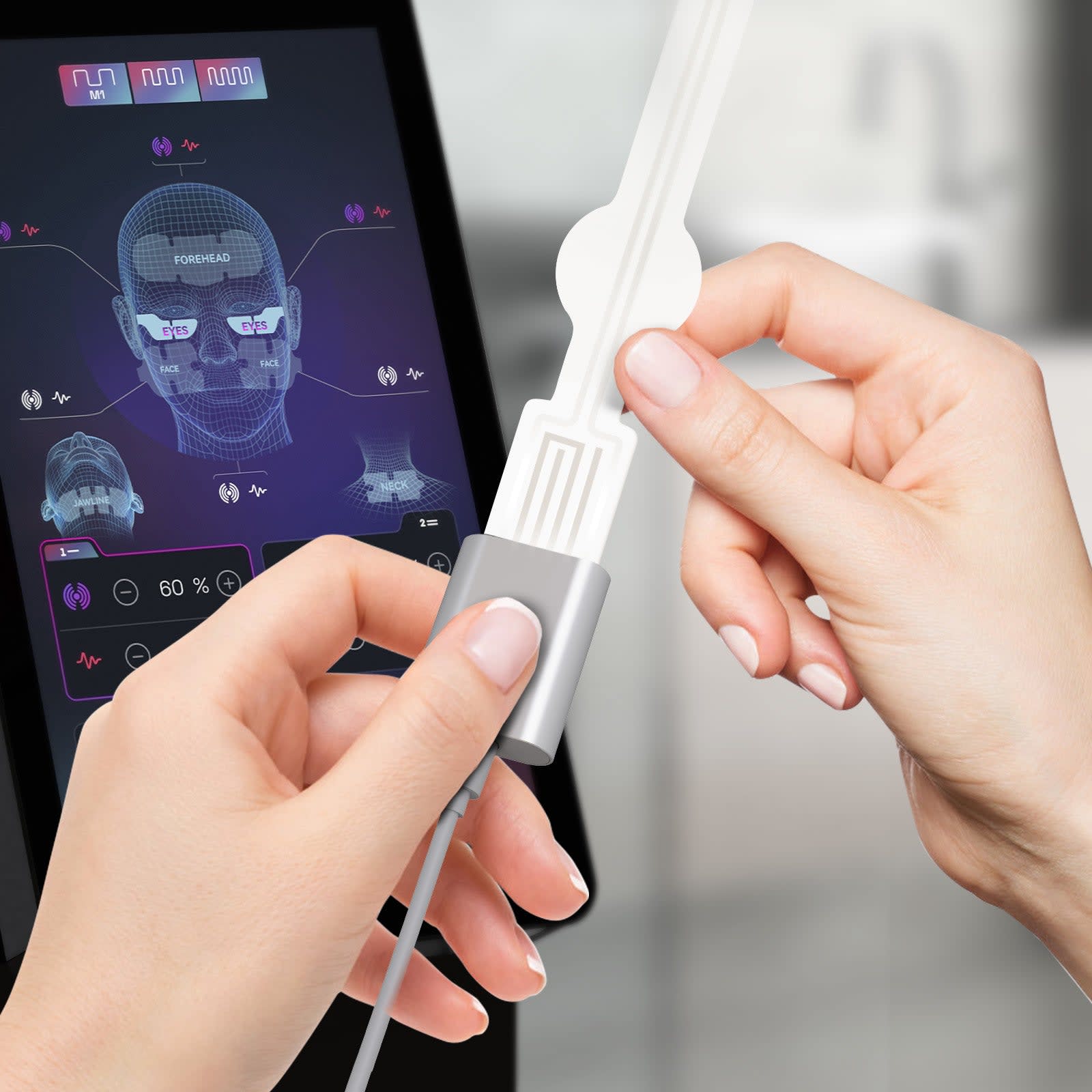
Connect and place the patches. You can place them on your forehead, under your eyes, cheeks, jawline, or neck, wherever you’re trying to treat. Make sure you’re pressing them flat against your skin because if the edges lift you’re going to feel it right away. Once everything is connected, the device picks up where you placed them and shows it on the screen, which is kind of cool.
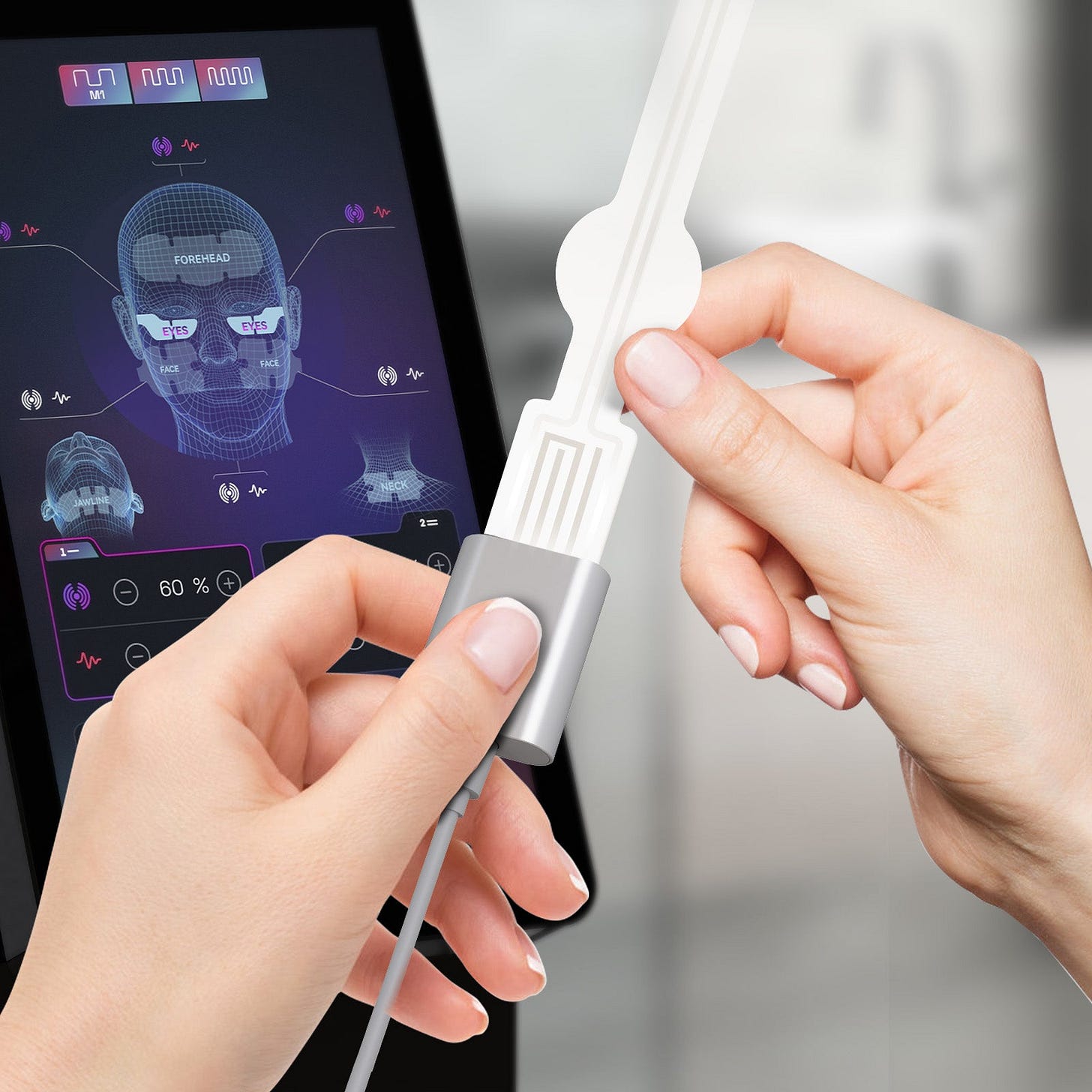
Adjust your settings. Use the touchscreen to choose your mode, set your RF and microcurrent levels, and pick your treatment time. You’re going to want to start on the lower end, especially if you’re putting patches near your eyes, and then work your way up as you get a feel for it. For your cheeks or jawline you can usually handle more intensity, but I wouldn’t go straight to the highest setting your first time.
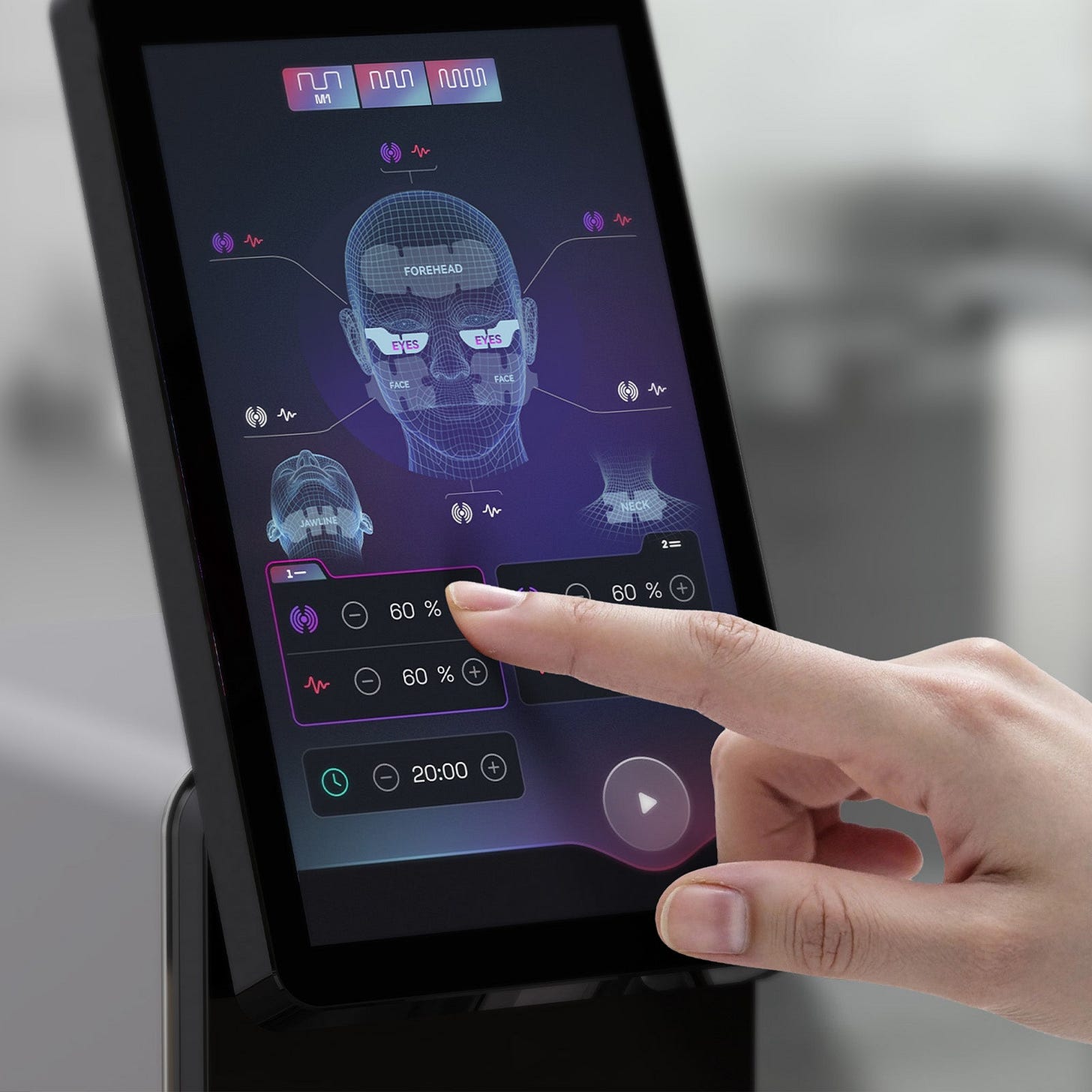
Press start and let it do its thing. You don’t have to move anything around your face or stay focused on it. The patches stay in place and the device runs the session on its own. Most sessions are around 20 minutes and it shuts off when it’s done, so you can just sit there and let it run.
Take off the patches and clean them. Peel them off, clean the adhesive side, and let them dry before you put the protective film back on. You can reuse them, but you’ll want to replace them over time.
Keep it simple after. If your skin feels warm you can press a cold compress on it, then go in with a moisturizer. You don’t want to put anything harsh on your skin right after a session.

For more detail you can check their website and manual since they go into everything there.
How Often Should You Use ViForme and What to Expect
This isn’t something you use every day, which was a relief to hear because I don’t need another thing on my morning list.
The recommendation is once a week with about a 7-day gap between sessions, and a full cycle is four sessions total, which gives your skin time to actually respond instead of just being overwhelmed.
If you’re using it for the first time, stick with the default settings for that whole first cycle before changing anything, then adjust based on how your skin feels.
Using it more often doesn’t speed things up and can actually just be too much.
Once you've hit the results you're after, you move into maintenance, which is once a month, and that's one of the things that sets this apart from other devices since those results can last for months rather than being a temporary lift that fades fast.
In terms of what to expect, results aren’t instant but you’re also not waiting months to see anything.
With regular use you start noticing changes within a few weeks, not the next morning, but gradually in a way that makes sense.
A couple of things worth knowing before you start: because it works below the surface it’s suitable for all skin types and tones, and when you use it correctly it’s not something that causes facial fat loss, which I know is a concern some people have with devices like this.
You might also notice some puffiness right after a session but that tends to settle within a few hours.
The schedule is what makes this work, so if you’re going to try it, stick to it.
Does ViForme Work? My Experience
Neck
I started with the neck, and this one wasn’t really about skincare for me at all.
My neck is always tight because I’m hunched over my laptop and my phone basically all day, and even though I get deep tissue massages pretty regularly, the tension just comes back.

So when I saw the manual mention muscle tension and neck discomfort support, I figured that was as good a place to start as any.
Setup was easier than I expected.
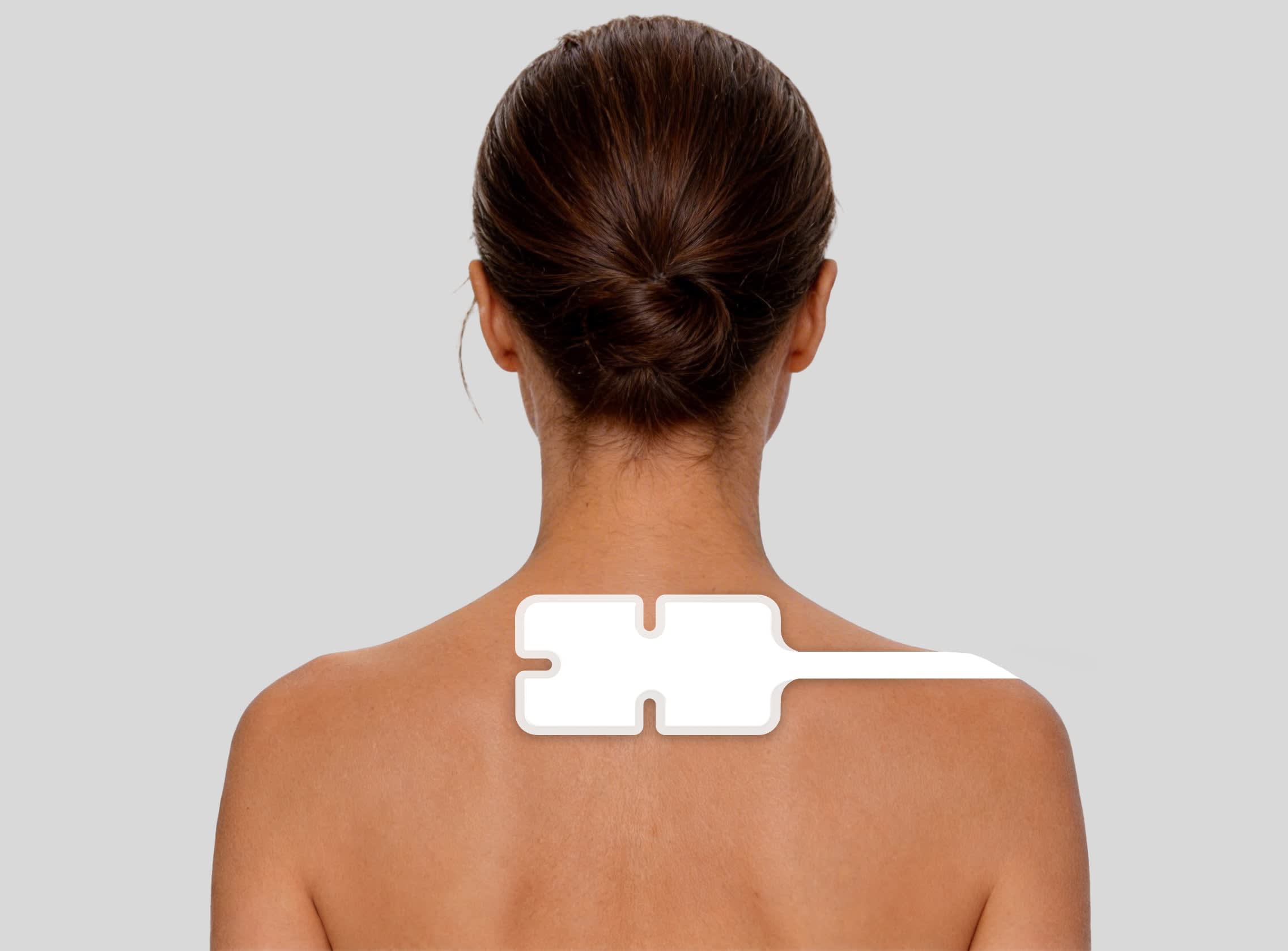
I opened the patch, plugged it into the device, and the screen recognized right away that it was the neck patch and set the program for me without me having to do anything.
The manual actually recommends 30 minutes for this area, but I went with the 20-minute option that came up on the screen because I was a little scared to go straight to the longest setting on my first try, if I’m being real.
Once I hit start, the right side of the back of my neck started vibrating first, and it was this gentle, almost rhythmic sensation that I can only describe as kind of soothing.
I kept waiting for heat because of the radio frequency, but it never really came, at least not in any intense way.
I was on my phone the whole time, just sitting there letting it run.
At some point I noticed the stimulation felt much stronger on one side than the other, and I assumed that was just how the device worked until I realized I hadn’t placed the patch in the center of my neck properly.
I paused it, adjusted, and started again, and after that it felt more balanced.
Something I thought was interesting: I could put my fingers right on the patch and not feel it vibrating at all, but I could feel it clearly in my neck.
By the end, my skin felt a little warmer to the touch but there was no redness, no irritation, nothing visually different.
What did feel different was the tension.
My neck felt looser, a little more relaxed than it usually does after a full day of sitting, and for me that alone made it worth trying.
Eyes
I tested the eye area during a week where everything was working against me.
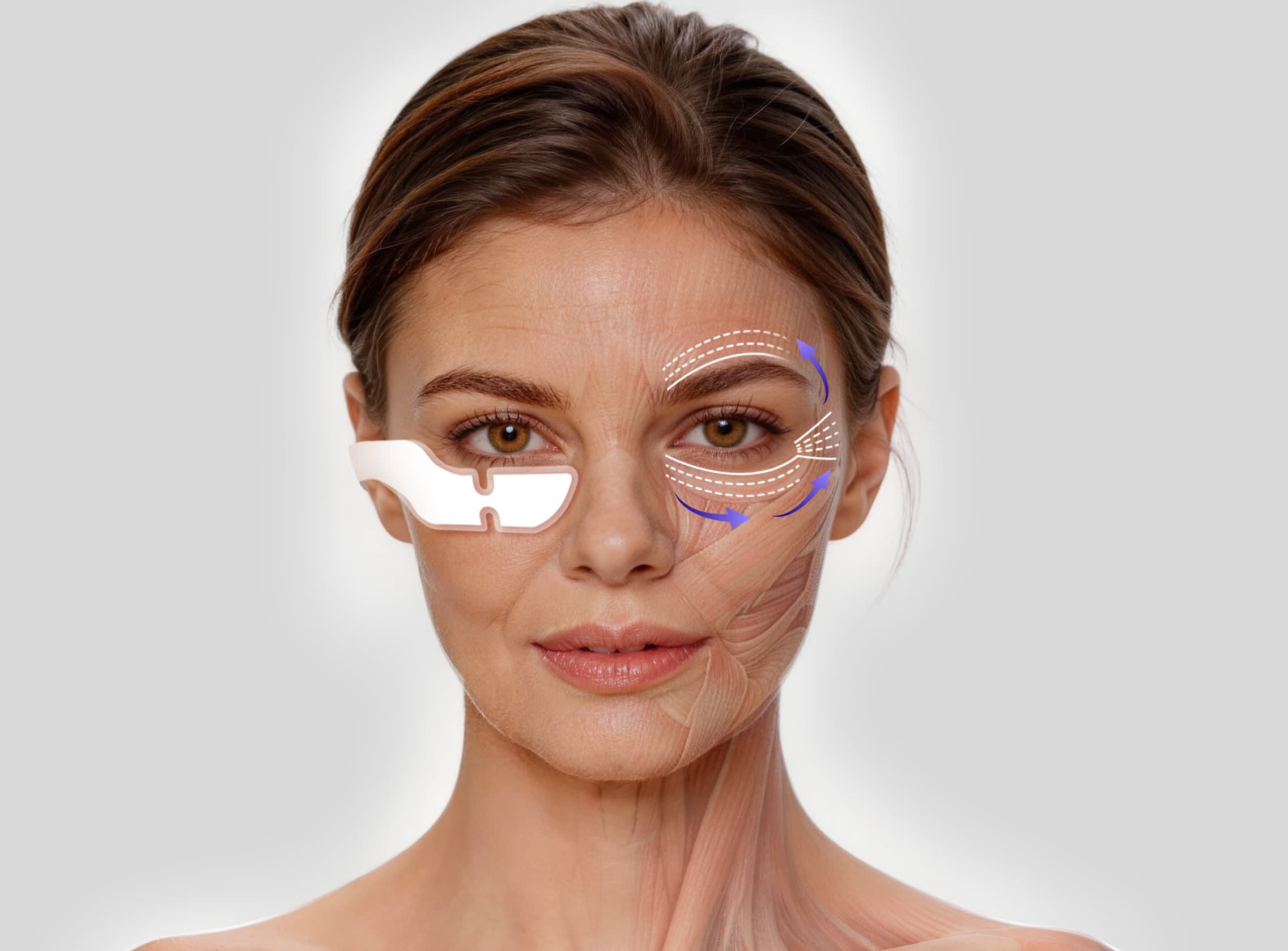
I’d been going to bed past midnight every night because of work, dealing with nasal congestion from allergies, and I’d had a margarita the night before, so when I woke up that morning my dark circles and puffiness were noticeably worse than they usually are.
Not ideal, but a pretty good stress test for the device.
The first thing that tripped me up was the setup.
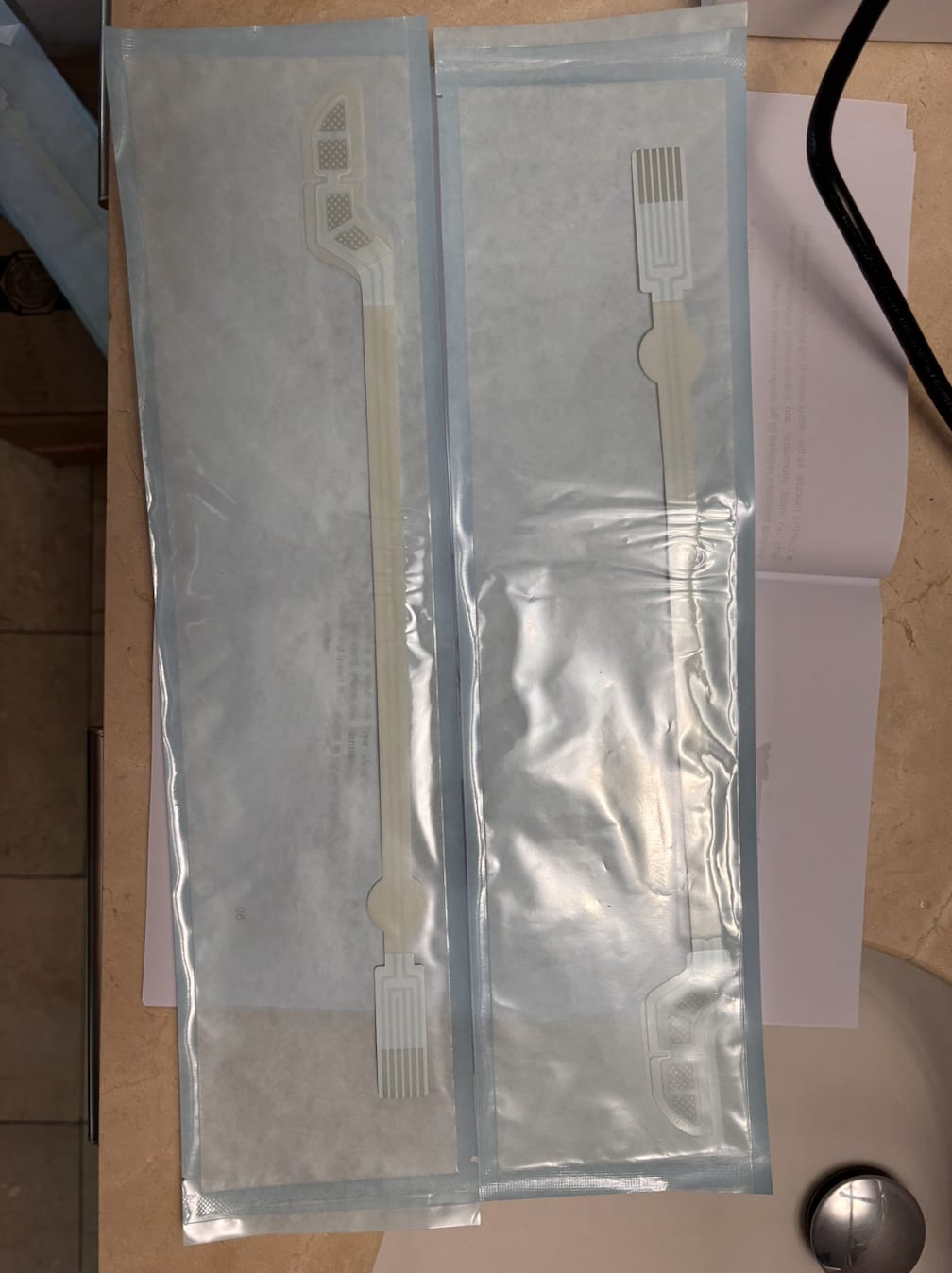
The patches have to be inserted into the connector a specific way, and when I had them facing the wrong direction the device acted like nothing was plugged in at all.
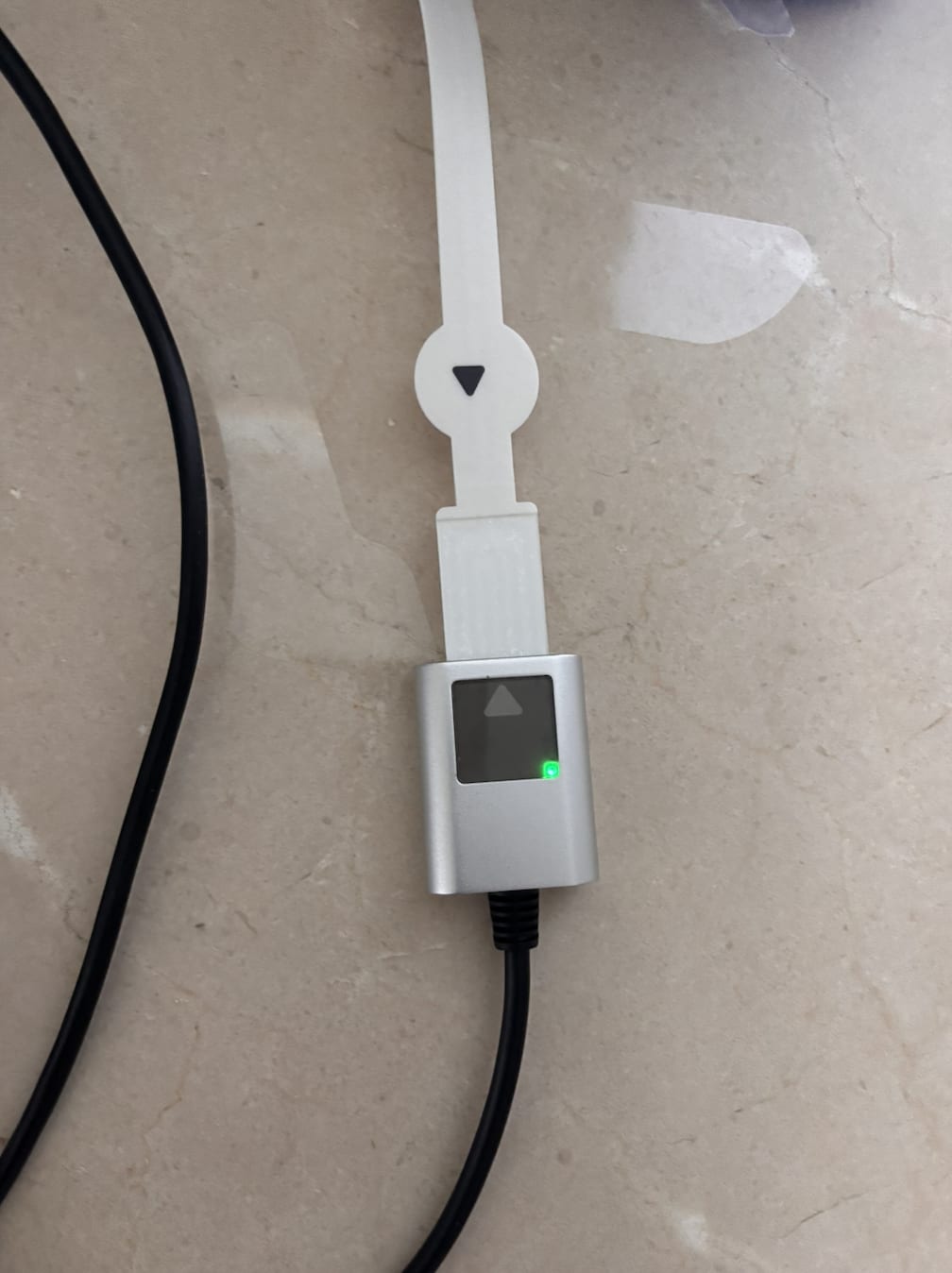
Once I flipped them the right way it picked up immediately and applied the correct settings for the eye area.
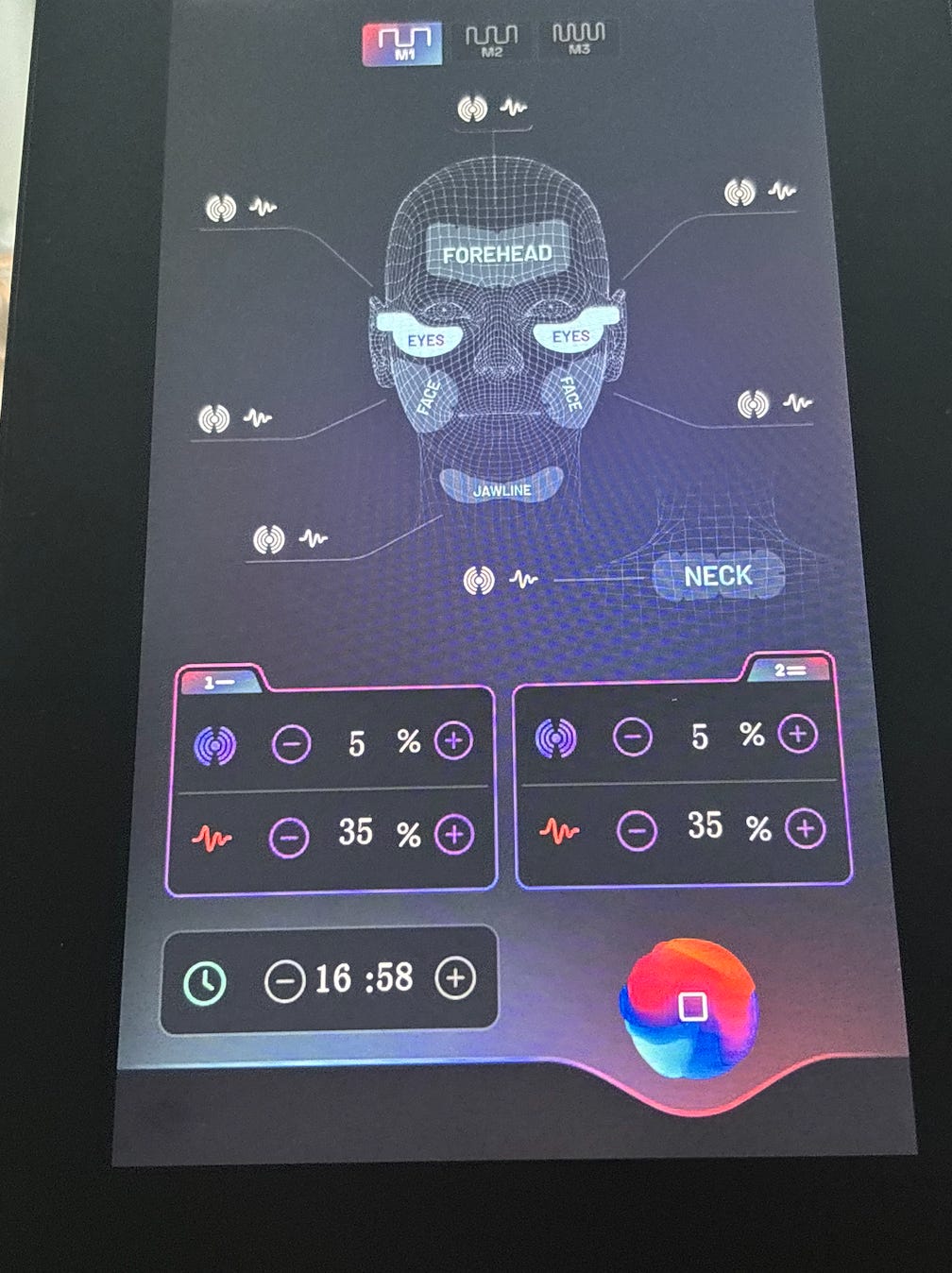
The default intensity came up at 50%, and I tried it for a few seconds before deciding that was way too much stimulation that close to my eyes.
I dropped it all the way down to 25% but then couldn’t feel anything, so I landed on 35% which gave me a vibration I could feel without feeling like I was losing my mind.
And I do want to say, it doesn't hurt at all, but there is something about having that kind of sensation right next to your eyes that your body just doesn't know what to do with at first.
It's a little freaky, just because you're not used to having vibration that close to your eyes, so your biological response is kind of like, what is happening right now. I had to just breathe through it and stay calm.
My instinct was to tense up, and once I got used to it, which took maybe a few minutes, it was fine.
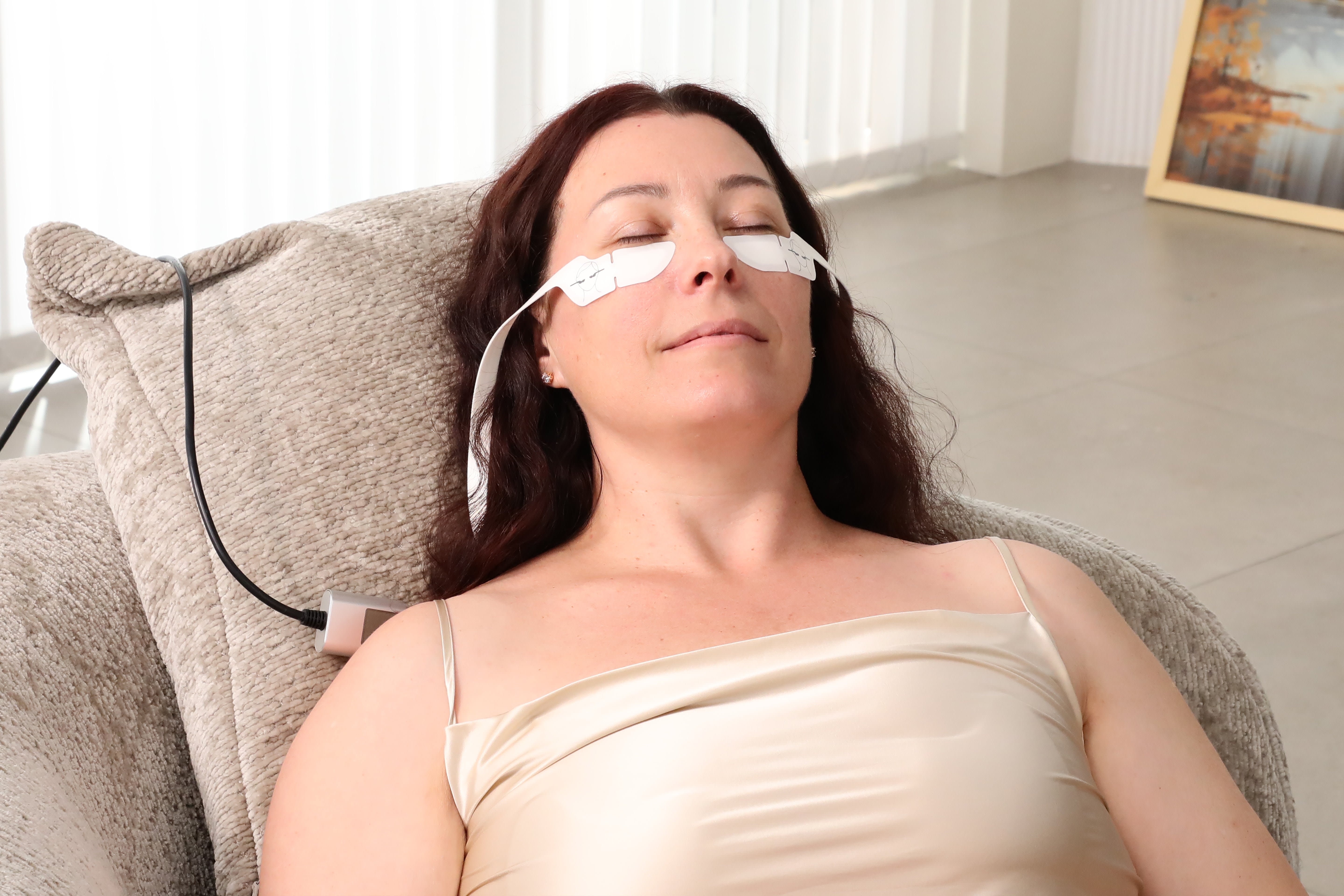
Positioning was something I had to figure out the hard way.
I tried sitting upright so I could keep working, but the connectors are heavier than you’d think, and if you let them hang down they pull the patches right off your face.
I ended up lying down, which I should have just done from the start, and that kept everything in place for the full session.
So if you’re going to do the eye area, just lie down. It’s the move.
After 20 minutes, my dark circles looked about the same, but the puffiness had gone down noticeably.
That part I could see.
After a Few Sessions
I kept coming back to both the neck and eye area over the following weeks, and I do think it made a real difference.
My neck felt less tense on a regular basis, which honestly surprised me the most because I went in thinking that was just my baseline and something I’d always have to manage with massages.
The puffiness around my eyes seemed to go down over time too, and my dark circles looked less intense than they did that first week, which was admittedly my worst week in terms of sleep and stress so there was a lot of room to improve there.
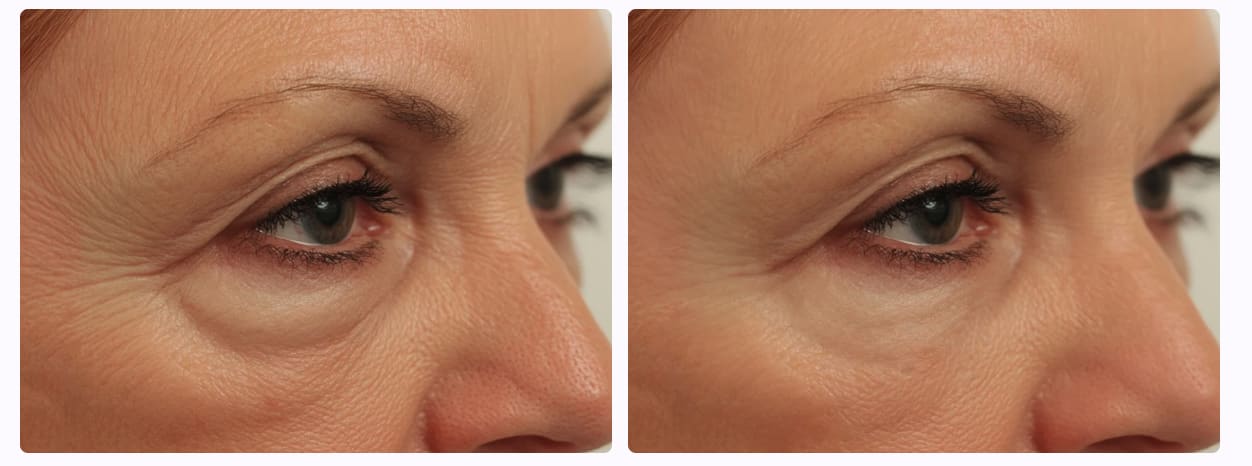
I was also sleeping more during this period and keeping up with my skincare routine, so I want to be upfront that I can’t point to this as the only thing I was doing.
But the changes felt consistent enough that I kept reaching for it, and I don't tend to stick with things that aren't working.
The Bottom Line: Is ViForme Worth It?
If you’ve been thinking about doing something for your skin but injectables feel like too big a step, ViForme is worth trying first.
You buy it once, use it on your own time, and you’re never locked into a clinic schedule or paying per session.
What makes it stand out from other at-home devices is that it’s combining two technologies at once, RF and microcurrent, in a hands-free setup that runs a full session in 20 minutes, once a week. That’s it.
And once you’ve hit the results you’re after, you drop down to once a month to maintain them, which is a very different commitment from the daily routines most at-home tools require.
It’s not going to replace filler or Botox if that’s what you’re after, but if you want something consistent that actually feels like it’s doing something and builds results that last, this delivers.
The neck tension relief was the biggest surprise for me, and the puffiness around my eyes did improve over time, which for someone who stares at a laptop all day and rubs their eyes too much was more than enough reason to keep coming back to it.
You can get ViForme here for 15% off.
Cheers,